Chunkook Lee
A Rib Cage for a Cherry Tomato
On sculptural protection, improvised sacredness, and the materials that refuse a perfect model
Read the conversation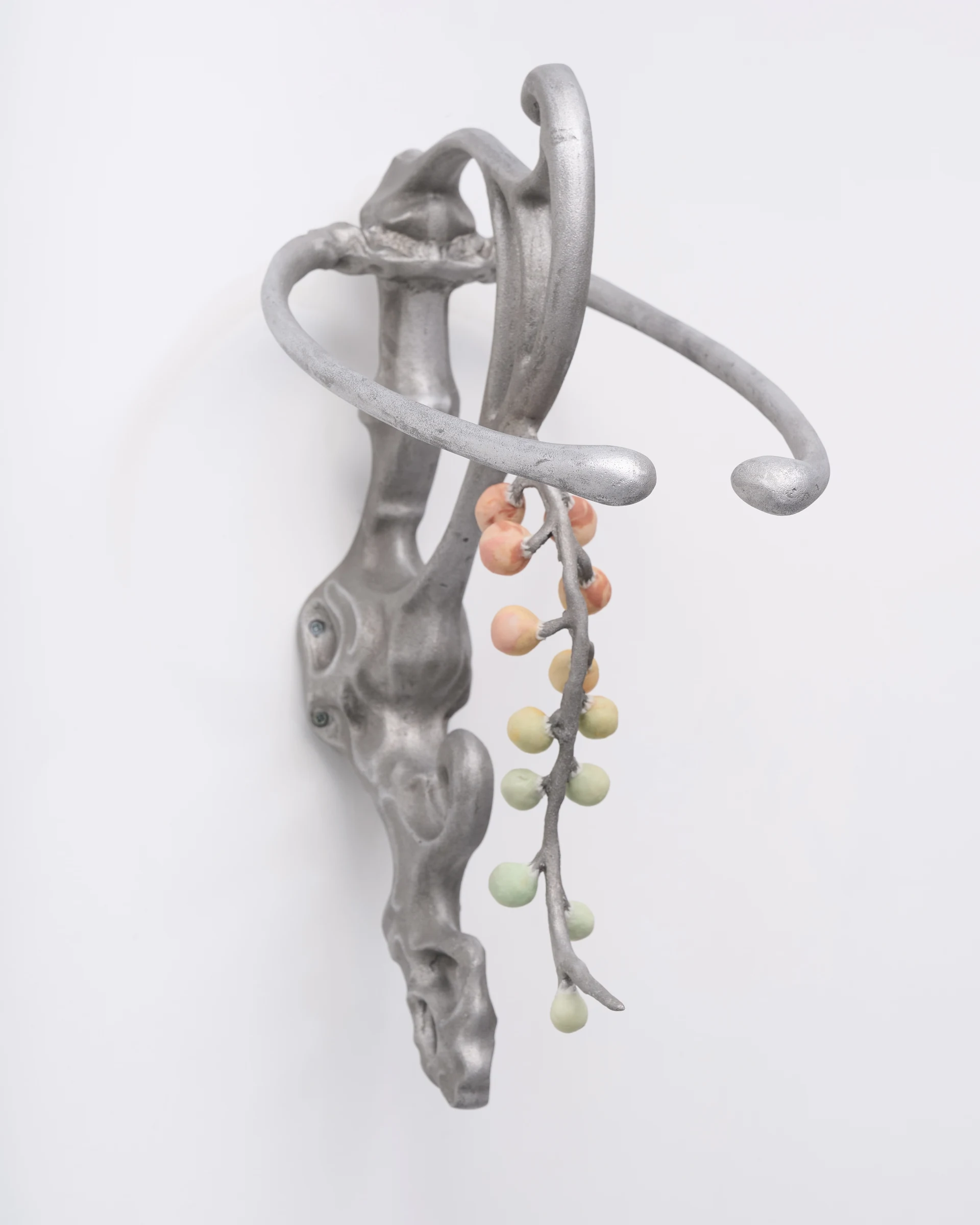
A sculpture can begin with a plant and arrive at a problem of transport. In Cherry Tomato, Seoul-based artist Chunkook Lee saw an echo of human anatomy in a branching stem; the frame that would help the work travel came to resemble the rib cage protecting internal organs. In Dew on Stem, molten glass and aluminum brought the demands of gravity into a digitally planned form, and Lee chose not to conceal every adaptation. His interest in translucent clay also recalls the economical church interiors of his childhood, where ordinary materials could make an unfamiliar atmosphere. In this written conversation with Art Curatorial Nomads, Lee discusses how sculpture is shaped by fabrication, desire, memory, and the freedom he leaves to the viewer.
In Cherry Tomato, what was the first thing you wanted to preserve from the plant, and what did you deliberately change? Could you take us through one decision that made the sculpture depart from its starting point?
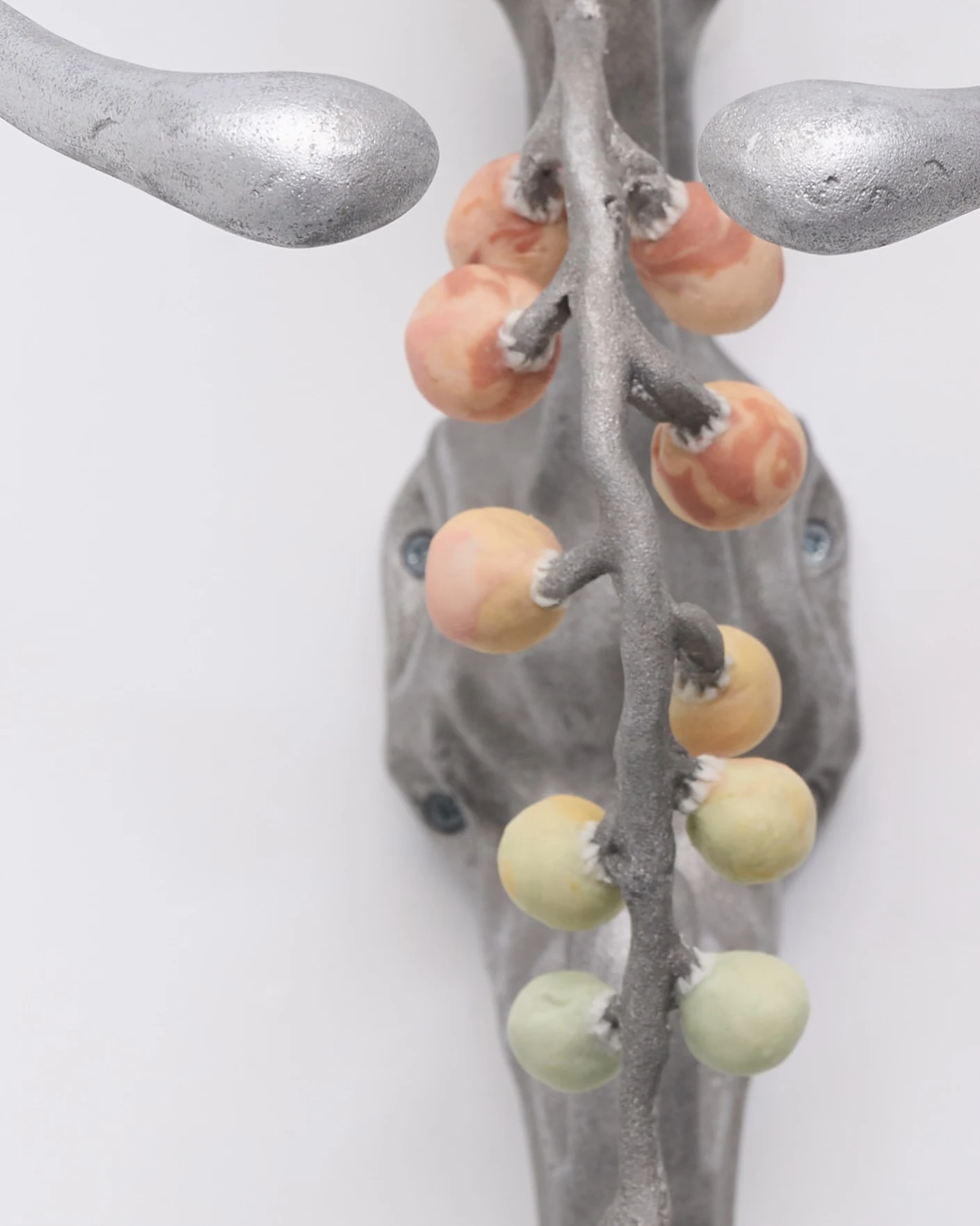
Chunkook LeeIn my practice, I often look for similarities between plants and the human body. In Cherry Tomato, the way multiple fruits branch out from a single stem reminded me of the structure of the human body, particularly its bones and internal organs.
One aspect I deliberately changed was the structural design of the work to meet the practical demands of international shipping. This led me to think about how the rib cage protects internal organs, and I applied a similar structural logic to the frame of the sculpture.
I also wanted to capture the temporary variations in color that appear as the fruit ripens. To translate this fleeting process into a physical material expression, I worked with different shades of clay without fully blending them together, leaving distinct tones visible within the clay itself. In this way, I sought to preserve the sense of change and transience found in the natural process of ripening.
In your RARARES interview, you recalled Korean church windows using printed film to suggest stained glass. Is there a detail in a recent sculpture that carries a similar tension between an inexpensive substitute and the feeling it creates?
Chunkook LeeI am interested in the visual conditions through which the status of a material is established and perceived. Growing up in Korea, I encountered a distinct approach to church architecture shaped by economic constraints. What drew my attention was how thin, economical materials could engage with religious and emotional realms. Those substitute materials evoked an atmosphere similar to traditional religious spaces while remaining lighter and less solemn.
In my work, I explore ways of transforming everyday materials and objects by giving them a distinct presence through ornamentation and heightened materiality. At times, I use translucent clay, which feels soft, tactile, and mutable, to bring religious imagery and everyday motifs together. This allows different images to overlap and connect in a fluid relationship without becoming completely fixed.
It is important to me that these forms keep a certain sense of mystery and distance from everyday reality. I want to create a state connected to the familiar world yet slightly removed from it, carrying an energy and presence that cannot be easily explained. Whenever I think about this quality, I connect it back to the atmosphere I experienced in Korean religious spaces.
Can you choose a work whose physical fabrication forced a substantial change to the digital model? What did you decide to keep from that deviation, and why?
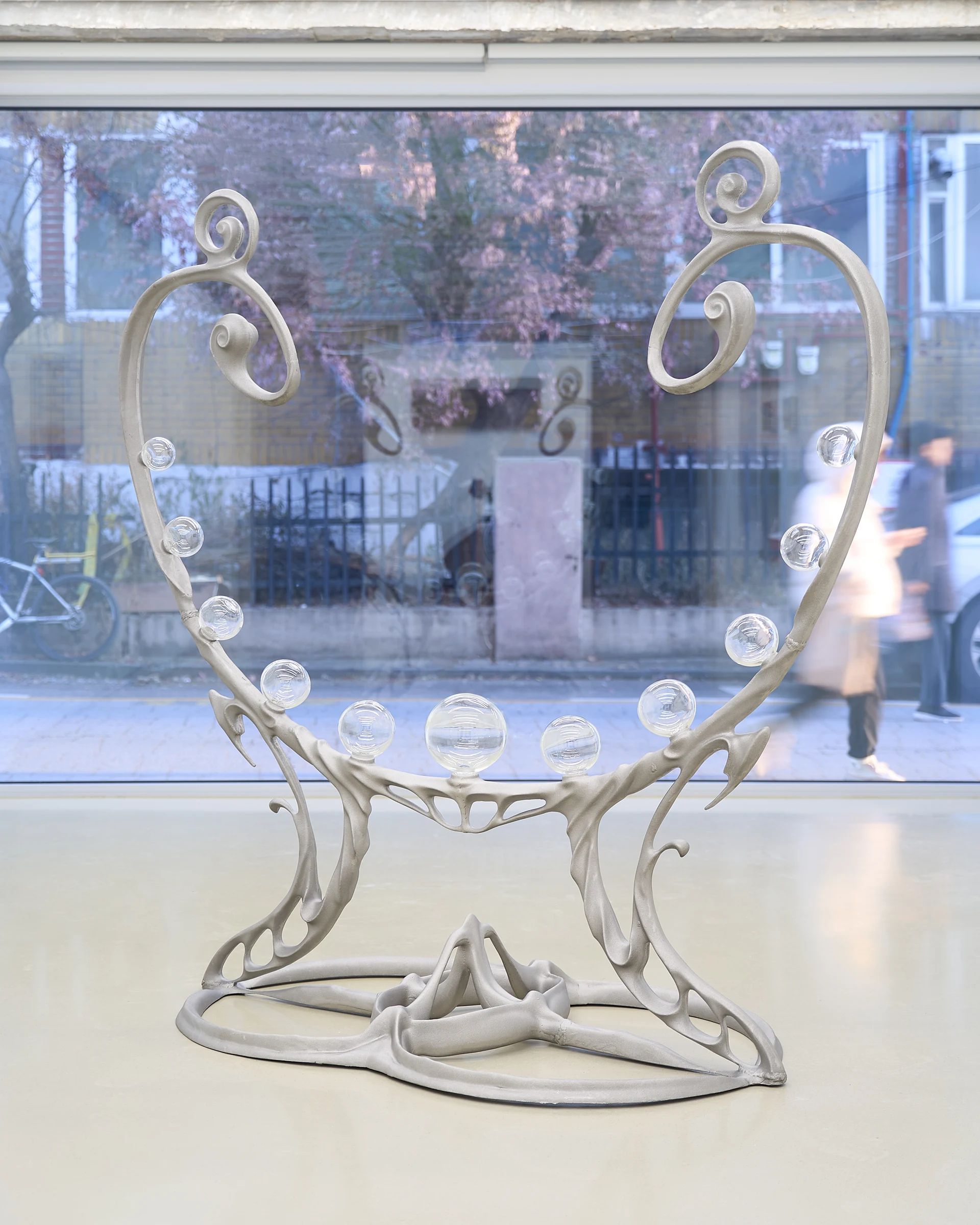
Chunkook LeeDew on Stem is a good example. In my practice, I realize phenomena found in non-human entities in nature, such as plants and animals, through sculptural form. Sometimes I work directly by scanning natural objects, and at other times I actively transform them to explore the possibilities of sculptural interpretation.
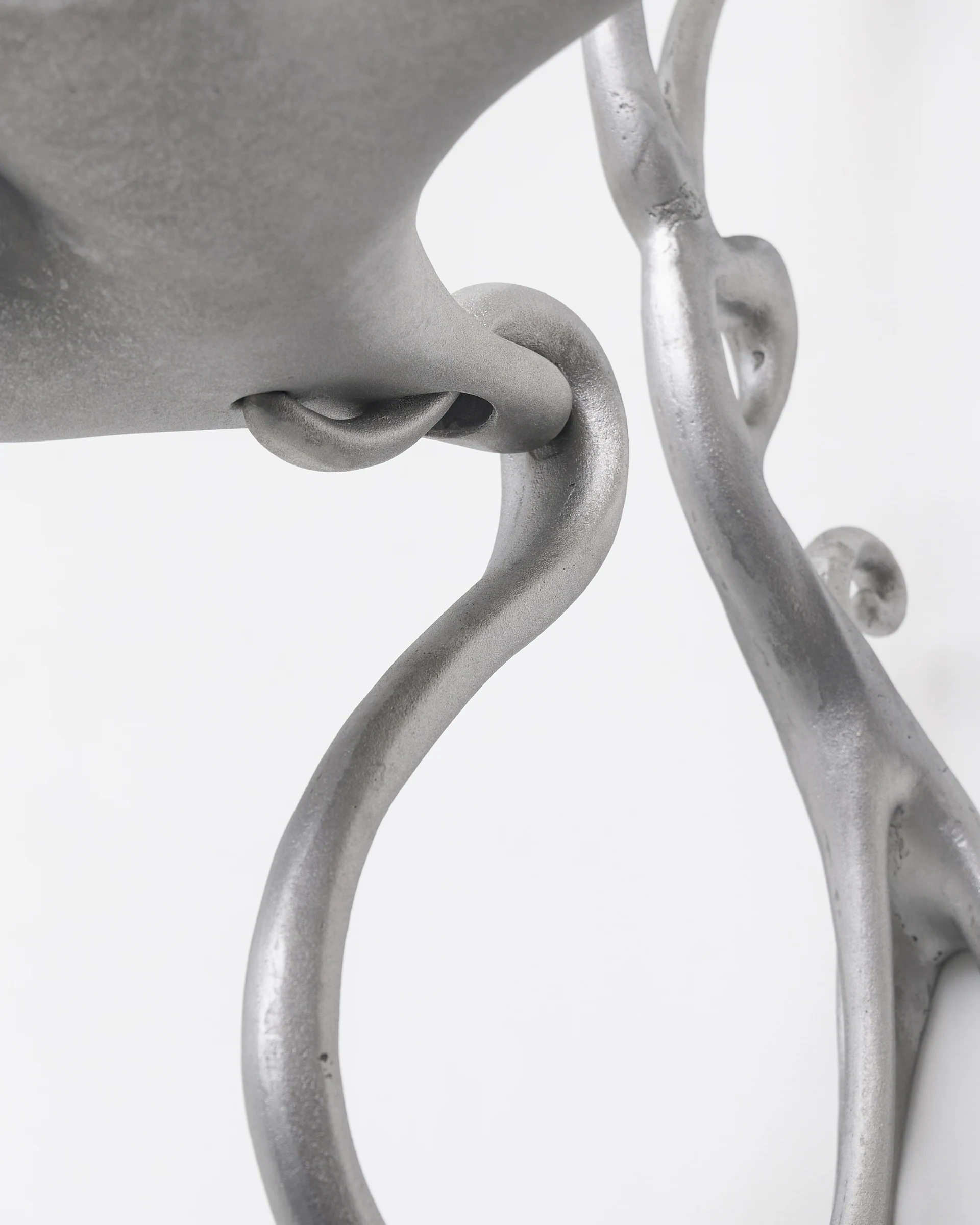
Dew on Stem developed through an exploration of gravity and support using molten glass and aluminum. On the stems of small plants, droplets of water briefly remain suspended through surface tension. I was drawn to how these droplets momentarily hold a state that seems to resist gravity, as if existing within a different physical order, and I wanted to approach this phenomenon as a sculptural condition.
To create a form in which flowing and stopping coexist within the same environment, I chose glass and metal and tested how their contrasting physical properties interact under gravity. Building a structure that could hold a delicate balance against gravitational force required working through various methods of support, such as bonding and welding, which altered the initial model. I chose to keep those structural adaptations visible in the finished piece. Through this process, the structure suggests the natural form of a plant stem while openly revealing how material conditions, supports, and gravity simultaneously make a particular form possible and limit it.
Soft Fall occupies a wall, while Cherry Tomato projects into the room. What does the viewer need to do differently in front of these works? Is there a position from which one of them stops making sense?
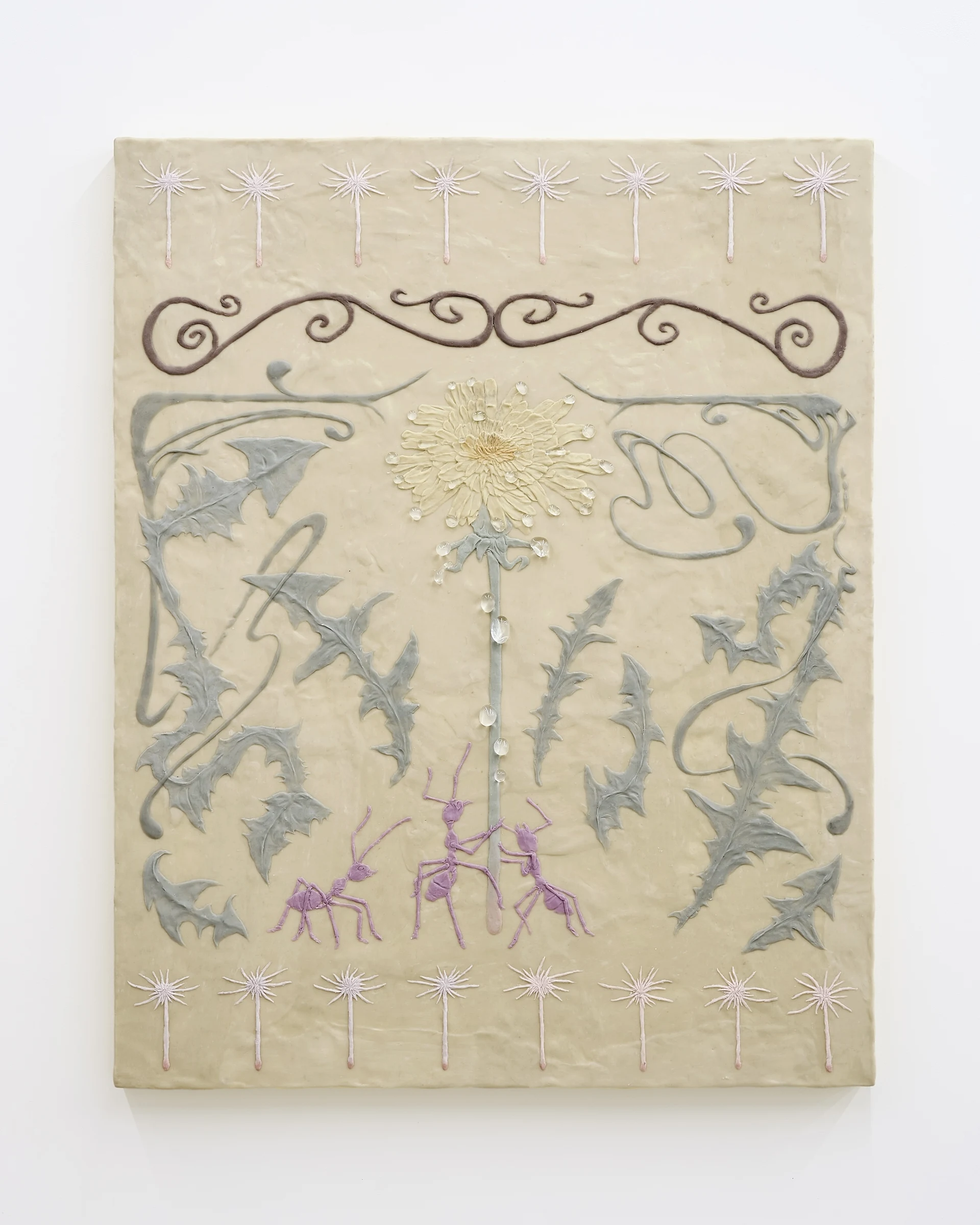
Chunkook LeeI prefer viewers to experience the works freely, without feeling that they need to approach or look at them in a particular way. The difference between Soft Fall and Cherry Tomato comes from my interest in exploring different ways of constructing sculpture.
Because relief works like Soft Fall are relatively flat, most of the visual information unfolds on a single surface. When making reliefs, I approach them much like composing an image or organizing a picture plane, considering how the individual elements relate to one another within the overall composition.
These different approaches naturally lead to differences in how the works occupy space and how they are experienced. Still, I see them as differences in the making process, and I leave it open for viewers to decide how they want to position themselves and engage with each piece.
The recent exhibition The Hunt of the Unicorn: Karkadann of Desire framed the work through desire and possession. Did that context bring out something useful in your sculptures, or was there a reading you wanted to resist?
Chunkook LeeDesire and possession are deeply connected to the fundamental emotions we experience when engaging with nature through making art. I also carry the desire to give form to something uncontrollable, fixing it into a specific shape and holding onto it as a material object.
In my practice, these feelings act as an underlying driving force that motivates and sustains the work. While they are not foregrounded during the actual fabrication process, the context of this exhibition offered me a new perspective from which to reflect on and interpret my sculptures.
What are you trying to make now that your existing methods cannot quite achieve? Please describe one unresolved problem, and any forthcoming project you are ready to announce.
Chunkook LeeAt the moment, I am focused on expanding the possibilities of the sculptural methods and materials I have been working with. Until now, my practice has centered on translating forms and phenomena found in nature into sculptural objects. Moving forward, I want to explore how naturally generated and transformed shapes can be understood through the perspective of the body and developed into sculptures that physically connect to it.
While I am still developing a concrete method, I am experimenting with interpreting natural forms through bodily sensations and experiences and translating them into new material structures. Through approaches that move beyond my previous methods, I hope to look more closely at the relationship between form, the body, and materiality.