Jingyan Ding
What Can a Painting Change?
On a figure disappearing into blackness, the space between two canvases, and a slower way of working after moving to Dali.
Read the conversation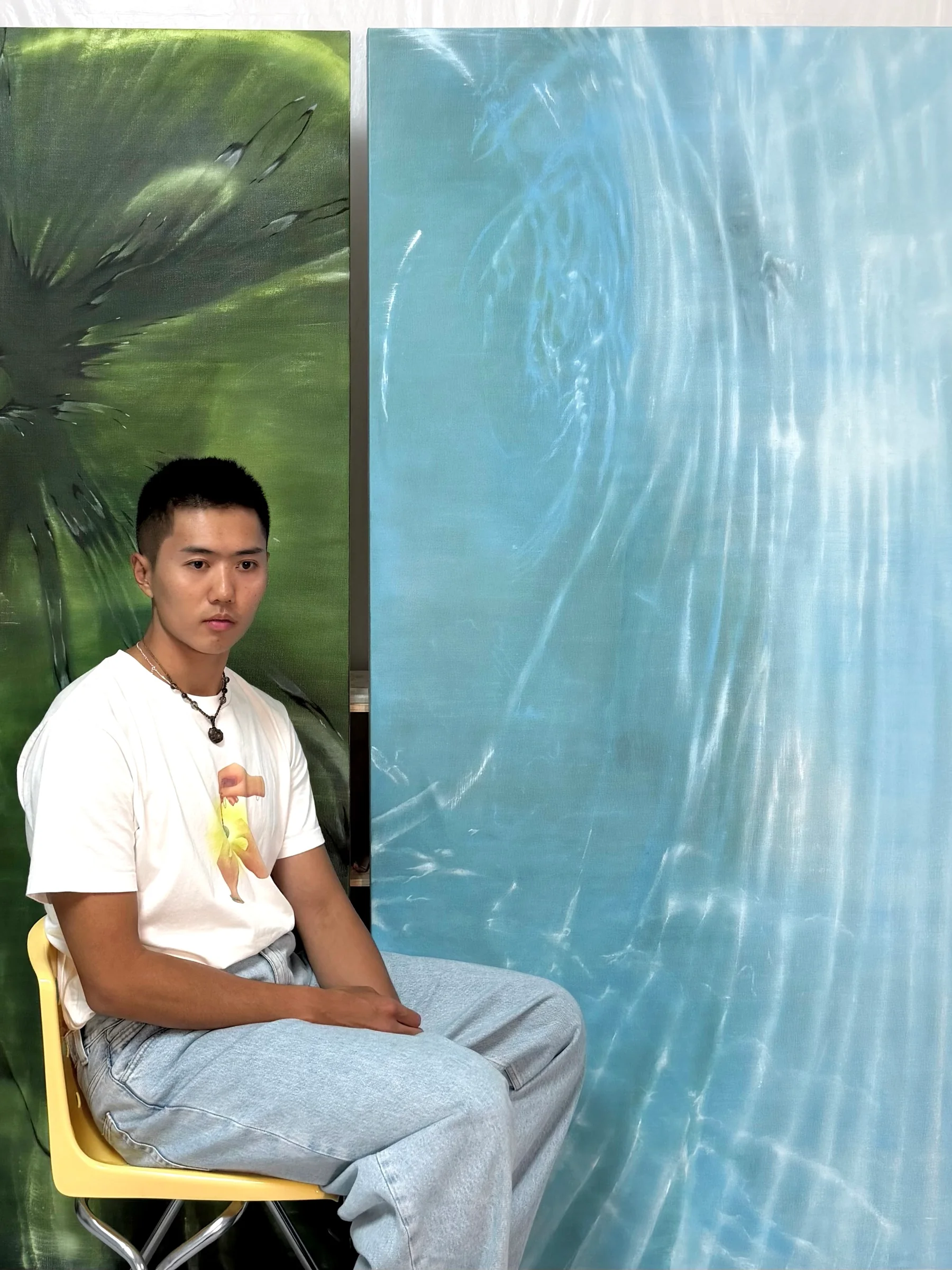
When Jingyan Ding is asked how a painting might change a viewer’s perception, he revisits a distinction he once made between transformation and the consumption of an idea. The question now seems less clear-cut to him. In this email conversation with Art Curatorial Nomads, Ding describes the decisions behind four recent paintings: how two images relate, why a gap matters, and what happens when a recognisable figure becomes obscured. He also discusses his move from Milan to Dali, where closer contact with nature has brought larger formats, a slower pace and a more sensory approach to colour.
How do Untitled (Solar Disc, You) and Untitled (Moonlight, I) relate? What changes when a viewer encounters them together?
Jingyan DingBoth paintings explore the illusory nature of the physical body. I see everything in the world as arising from the coming together of causes and conditions, like an image assembled from countless pixels, constantly changing and disappearing.
In Untitled (Solar Disc, You), this idea appears through the three-coloured circular motif on the naked body. These three colours combine to form our visual world, much like images on a screen, constantly appearing and disappearing. We ourselves are also made up of countless cells, continuously arising and passing away in an endless succession.
Untitled (Moonlight, I) brings to mind the metaphor of pointing at the moon: we should look at the moon, not the finger. The finger represents the methods that help us see through the illusory nature of appearances, while the moon points towards the true mind. The finger is important, but the moon is what we ultimately need to see.
Together, the paintings create a more connected experience, although each remains an independent and complete work. They point in the same direction through different means.
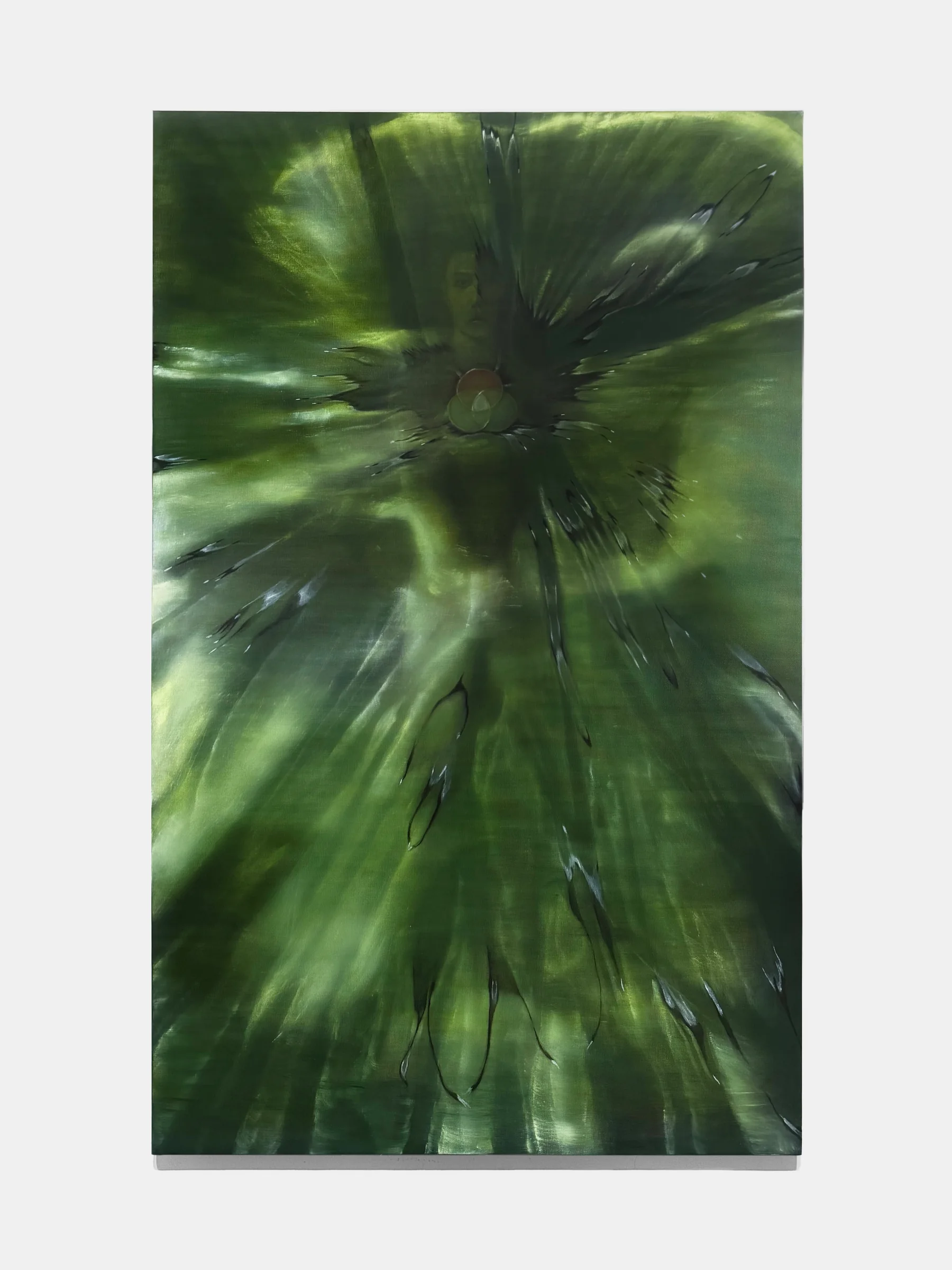
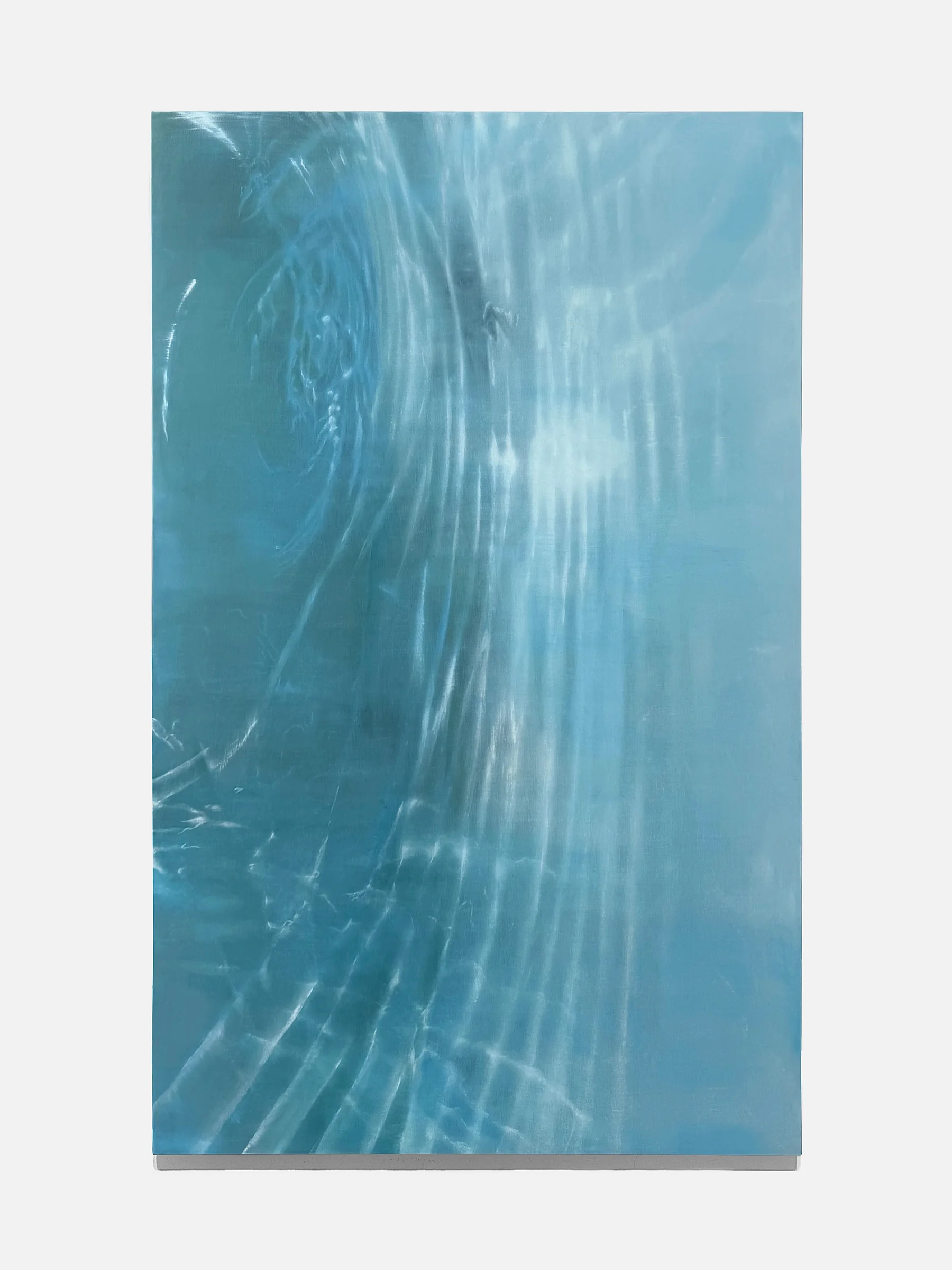
Shown side by side for this interview. These are two independent paintings.
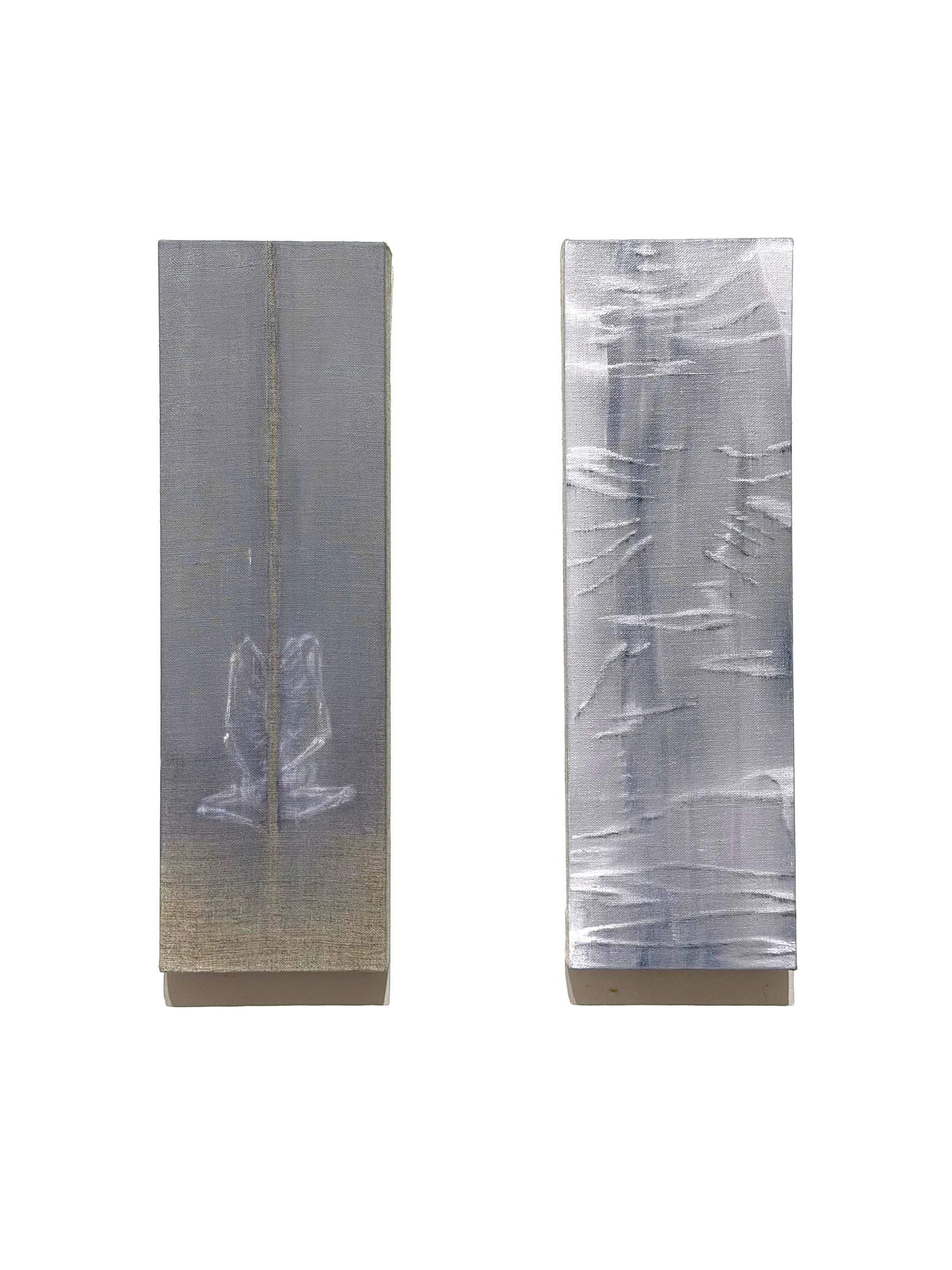
What did dividing Untitled (Non-Attainment) into two parts allow you to do? How does the gap affect the way we look?
Jingyan DingThis is an experiment I particularly like. Its two parts relate to the contemplation of the body's impurity and impermanence. I wanted to consider how the body has no inherent substance, but is formed through the combination of the four elements: earth, fire, water and wind.
Recognising this may help us loosen our attachments. Everything is impermanent, like flowing water, falling flowers, passing breezes and floating duckweed.
Although the two parts appear still and moving, I see them as aspects of the same process: observation and separation happening simultaneously. I deliberately kept a distance between them that is neither too close nor too far, allowing a sense of transition to emerge through the act of looking.
In your conversation with Wang Yaoli, you distinguished an encounter that changes perception from one that offers a concept to consume. How do you see that distinction now?
Jingyan DingOver time, I began to realise that these two kinds of experiences might actually be one and the same. Perhaps the distinction was simply a subjective concept I had created.
Initially, I wanted my paintings to function like Zen koans, offering viewers an opportunity for reflection and self-observation. Later, I became more interested in how viewers project their own inner experiences onto the work.
I often feel that everything we see is projected through the mind, like images from a projector. Everyone sees the world differently and is drawn to things through conditions they may not even be aware of. Whether a viewer's perception truly changes is not something I can determine. Ultimately, only the viewer can change their own perception.
All I can do is work from my own perspective, sensing something closer to the source and hoping to resonate with others through painting.
The earlier conversation with Wang Yaoli was published by BONIAN SPACE on 6 August 2025. Read the earlier conversation
What becomes possible when you obscure an image that was already recognisable?
Jingyan DingThis process happens in most of my paintings. I usually begin with a recognisable image, then gradually modify, obscure or blur it until it becomes less defined.
I feel that we are all living in dreams, with one theatrical scene following another. We change our costumes and become different characters. Through this process, I want my paintings to approach a dreamlike and illusory state.
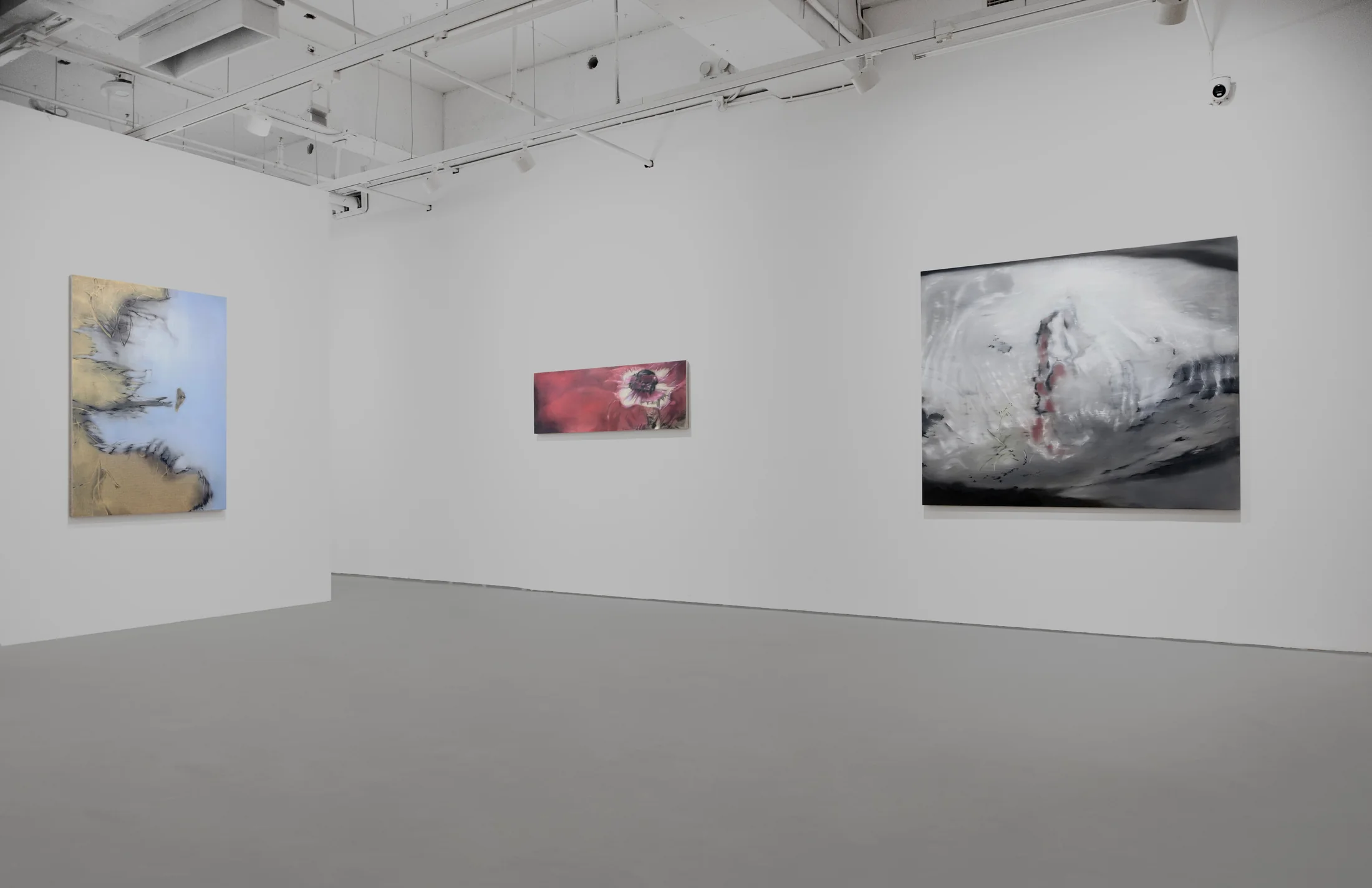
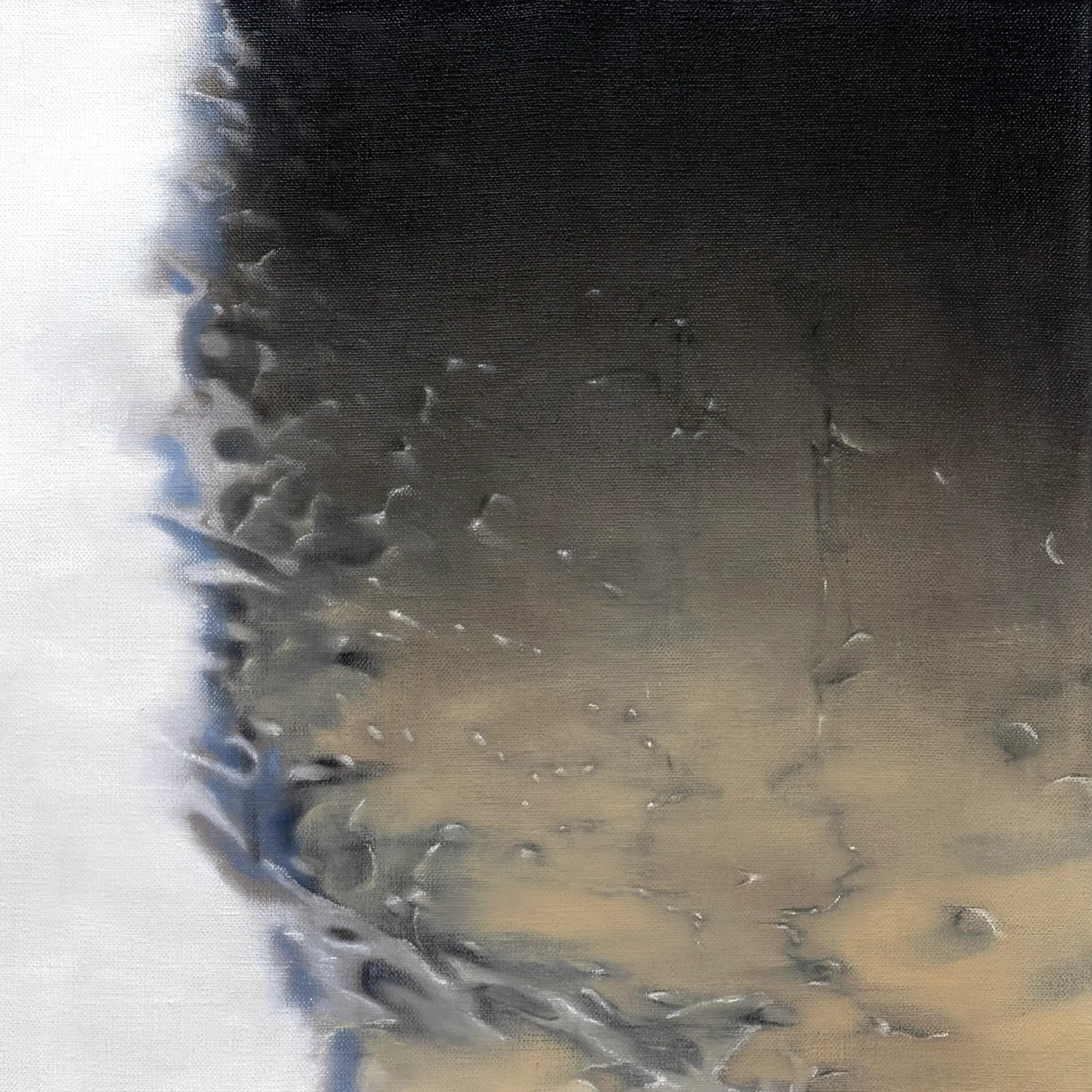
For example, Untitled (Future Mind) originally contained the outline of a Buddha figure, which was gradually swallowed by blackness. The future has not yet arrived, yet our minds are already projecting images of what might come. What we see is merely a momentary appearance within the mind.
For me, losing clarity is not simply about making an image less recognisable, but about questioning what we actually see.
What has changed in your painting since moving from Milan to Dali?
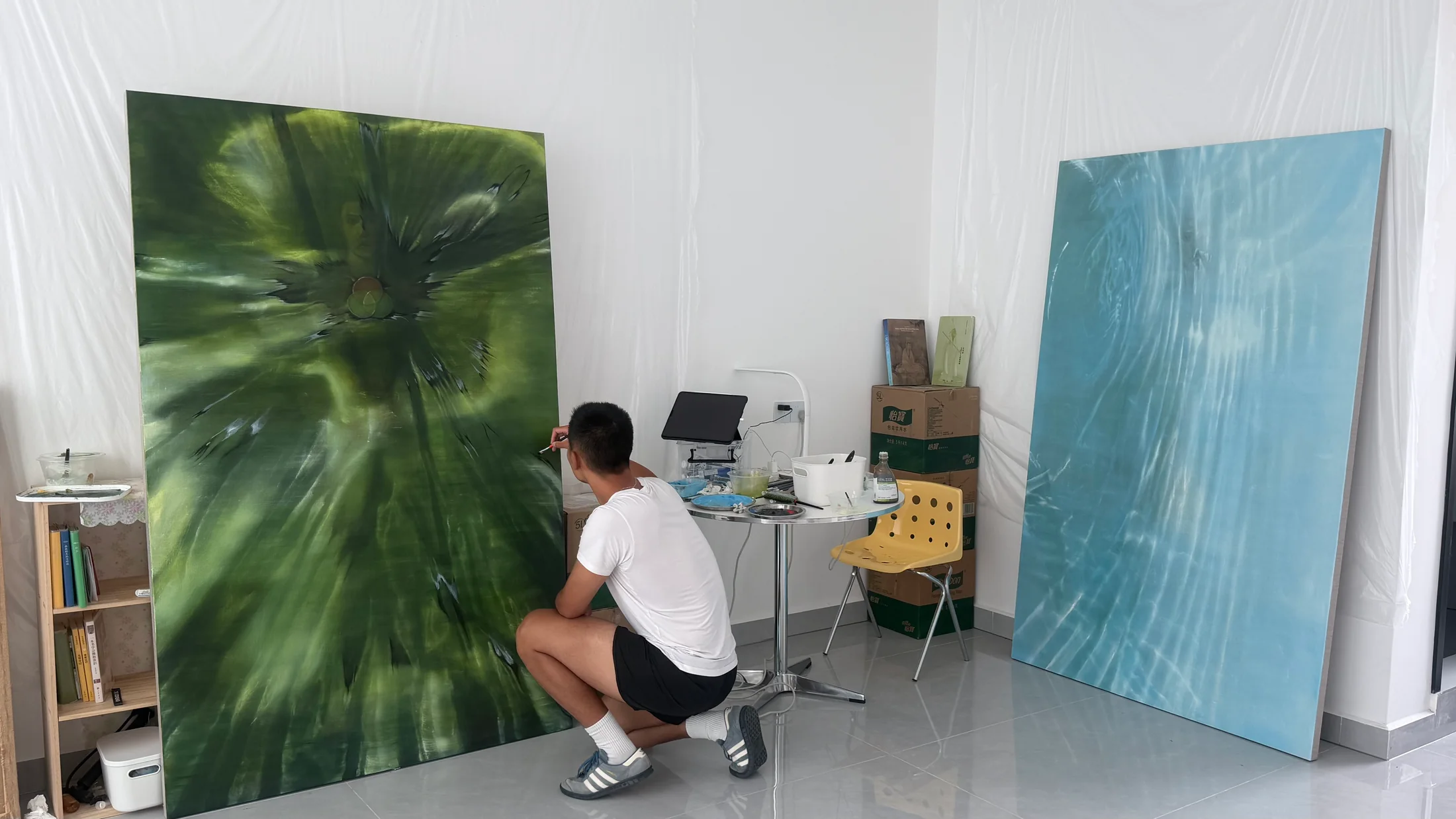
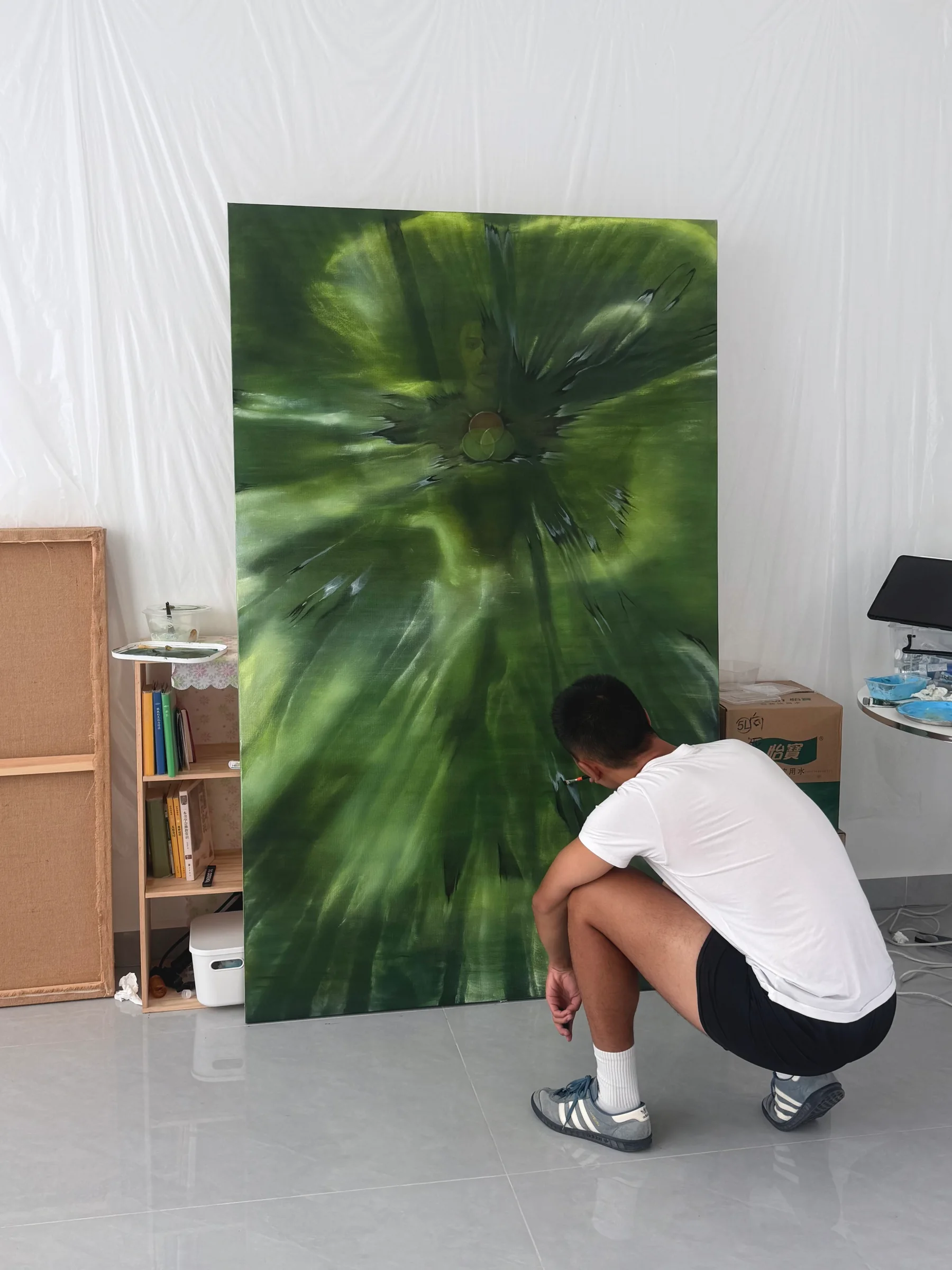
Jingyan DingMoving from Milan to Dali was one of the important decisions I made this year. Being closer to nature gives me more opportunities to experience it directly. Nature has always had a great influence on my work and is undoubtedly one of my most important teachers. Ideas such as impermanence, non-self and the power of the mind seem more immediate through these encounters.
This change has also influenced my paintings. I have started experimenting with larger formats, spending more time on each work and allowing the process to develop at a slower pace. My approach to colour comes increasingly from sensory experience rather than predetermined intentions.
I suppose I am simply a student trying to imitate nature.
What are you experimenting with now, and what can you share about future projects?
Jingyan DingI am not used to setting a fixed direction for my practice. I prefer to take things one step at a time and allow the work to lead me naturally.
Since returning to China, I have become increasingly interested in ancient Chinese painting, particularly works from the Song dynasty. I have already experimented with a few paintings in this direction. I am drawn to their approach to space and looking, and to their ability to express so much without saying too much. I hope to bring some of these qualities into my own visual language.
Several exhibition projects are still being discussed. If everything goes smoothly, I expect to have at least one solo exhibition and two group exhibitions next year, mainly in China. For now, I prefer to remain open and let things unfold naturally.
The plans described here refer to 2027 and remain under discussion; no venues or dates have been announced in this interview.
Exhibition view