Liang Fu
When a Painting Becomes an Object
The artist on marble frames, the surprises of selenite, and the traces he chooses to keep.
Read the conversation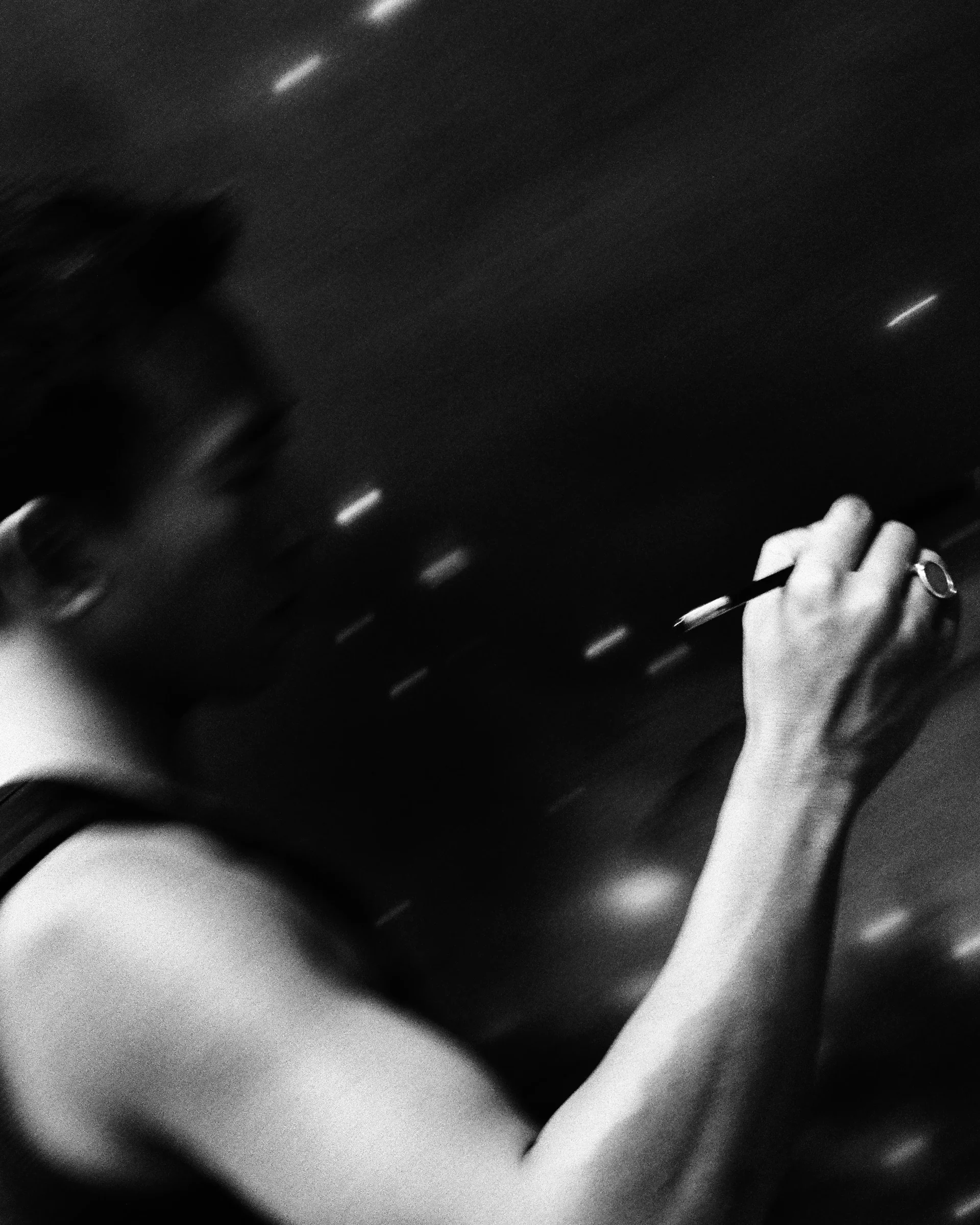
A marble frame can make a painter rethink the image it holds. For Liang Fu, that happened while making Melancholy surface. In this email interview with Art Curatorial Nomads, Fu looks back at Sublunary at Nicodim New York, moving between canvas, crystal and the space of the exhibition. He describes what happens when materials resist his intentions—and why those moments can become part of the work.
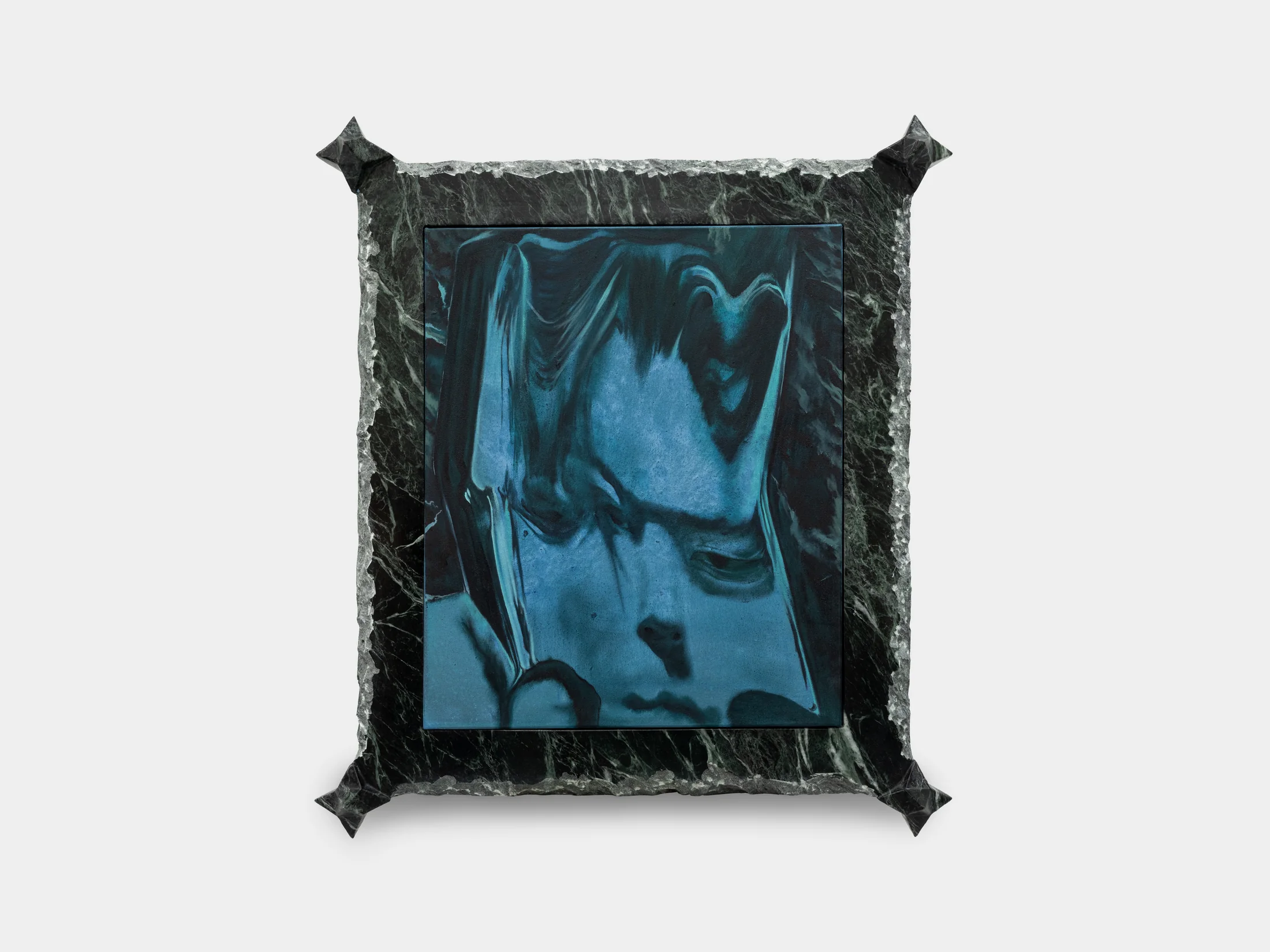
In Melancholy surface, how did the marble frame change your understanding of the painting?
Liang FuI tend to trust intuition when deciding where a painting begins and ends. Years of painting and looking at art also help me. In this work, the thickness and weight of the marble made me re-examine the boundary between image and sculpture. I want the frame to be part of the physical extension of the painting, breaking through the idea of painting as simply a two-dimensional plane.
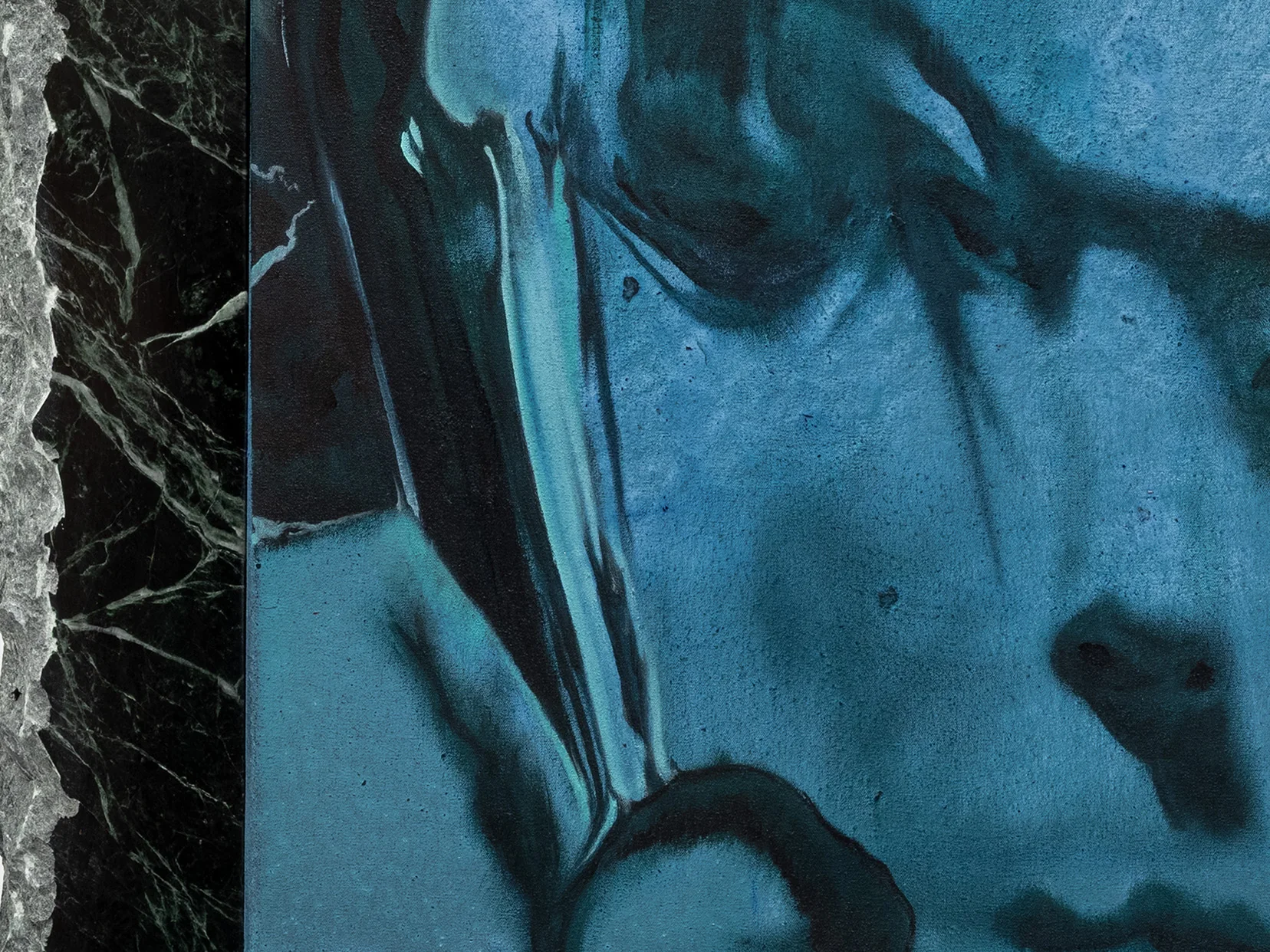
How does working on selenite differ from working on canvas?
Liang FuIn this painting, I tried to achieve a sense of transparent colour through layering. On the crystal mineral, I got a different texture—one brought by the material itself. I found that sometimes one also has to learn to accept the surprises or disappointments that materials bring. This is why I like to start from painting and explore different media: to discuss painting and material, or rather the boundaries of painting.
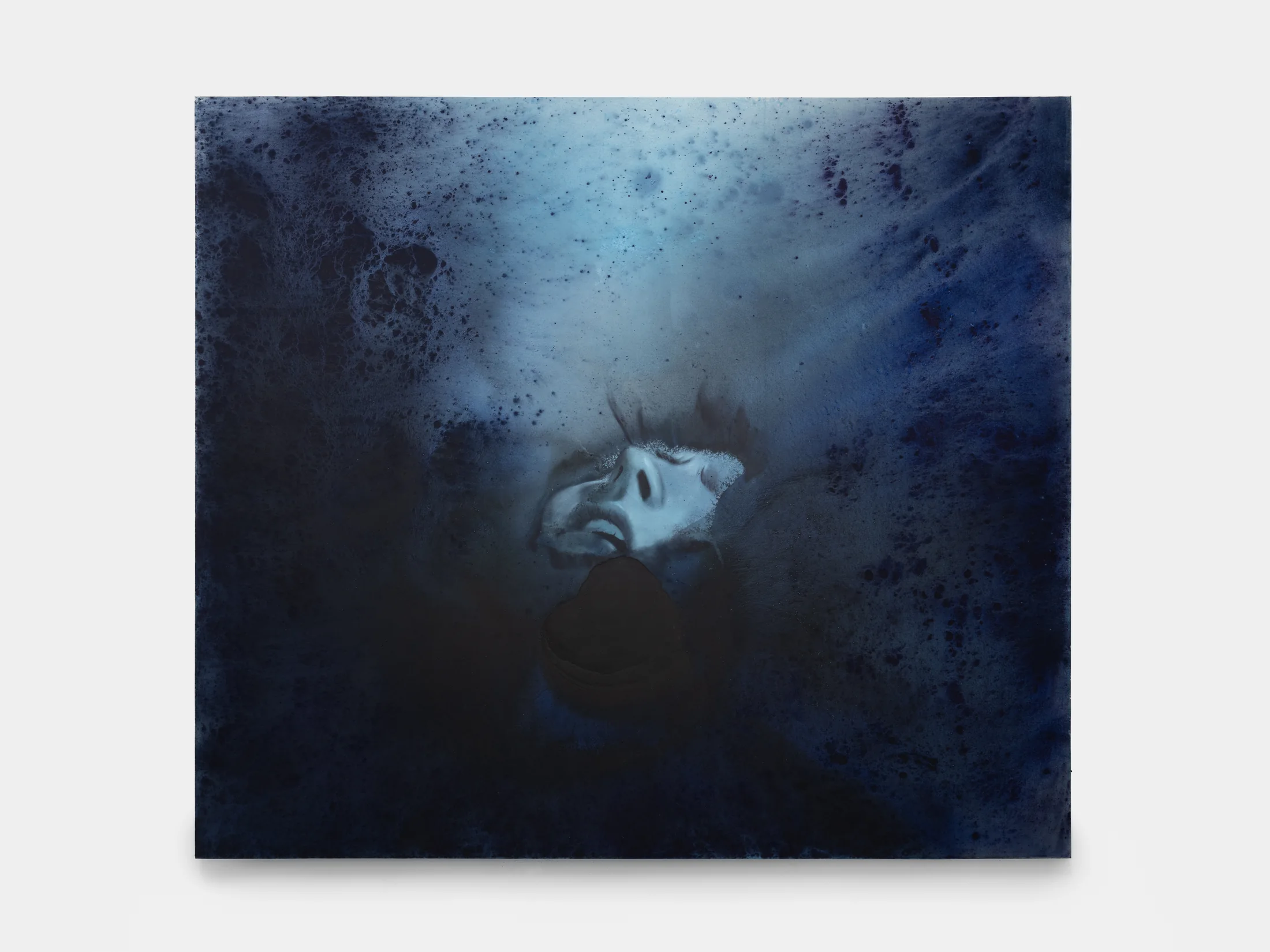
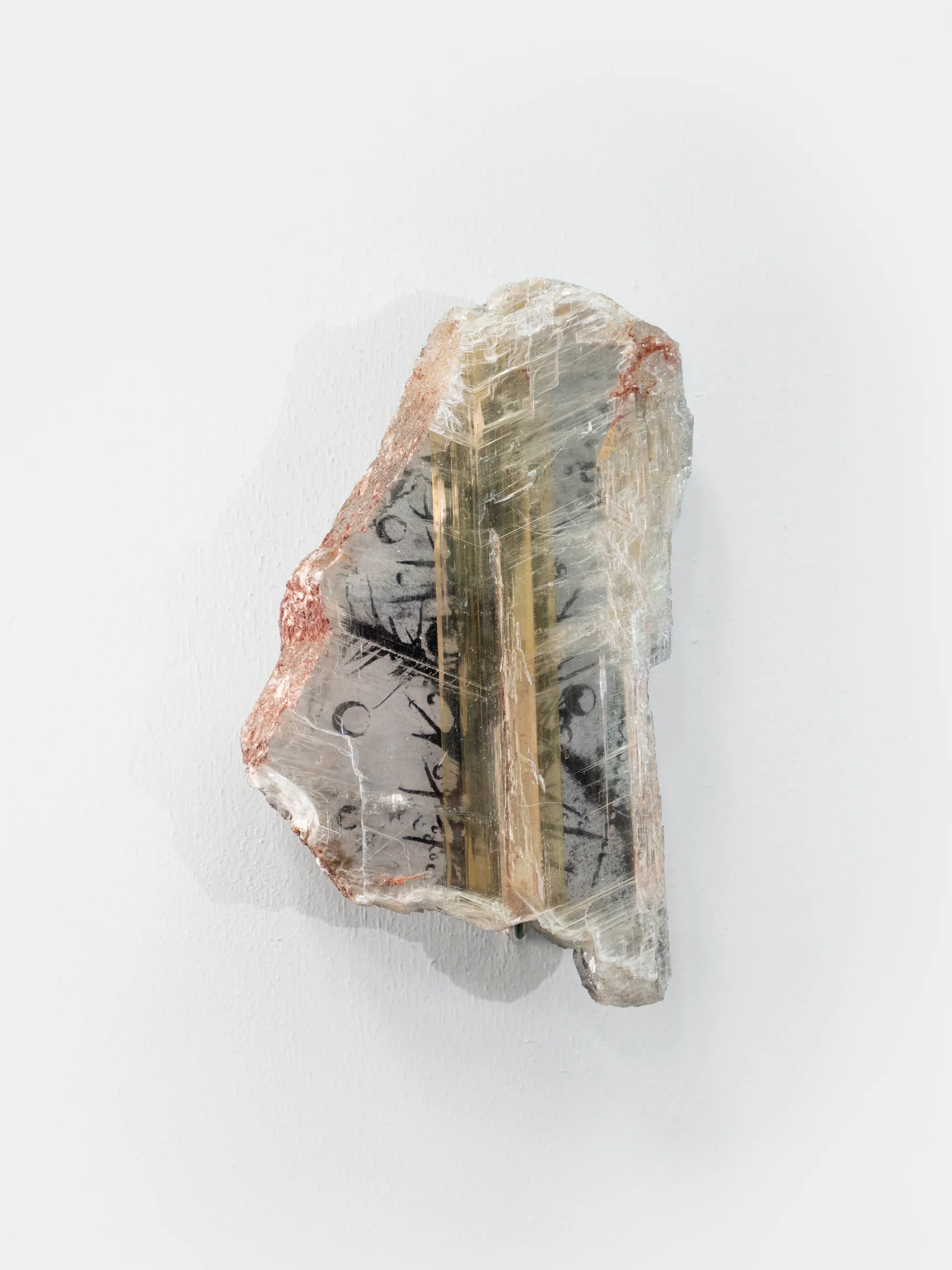
What do you choose to preserve in the traces left by water and pigment?
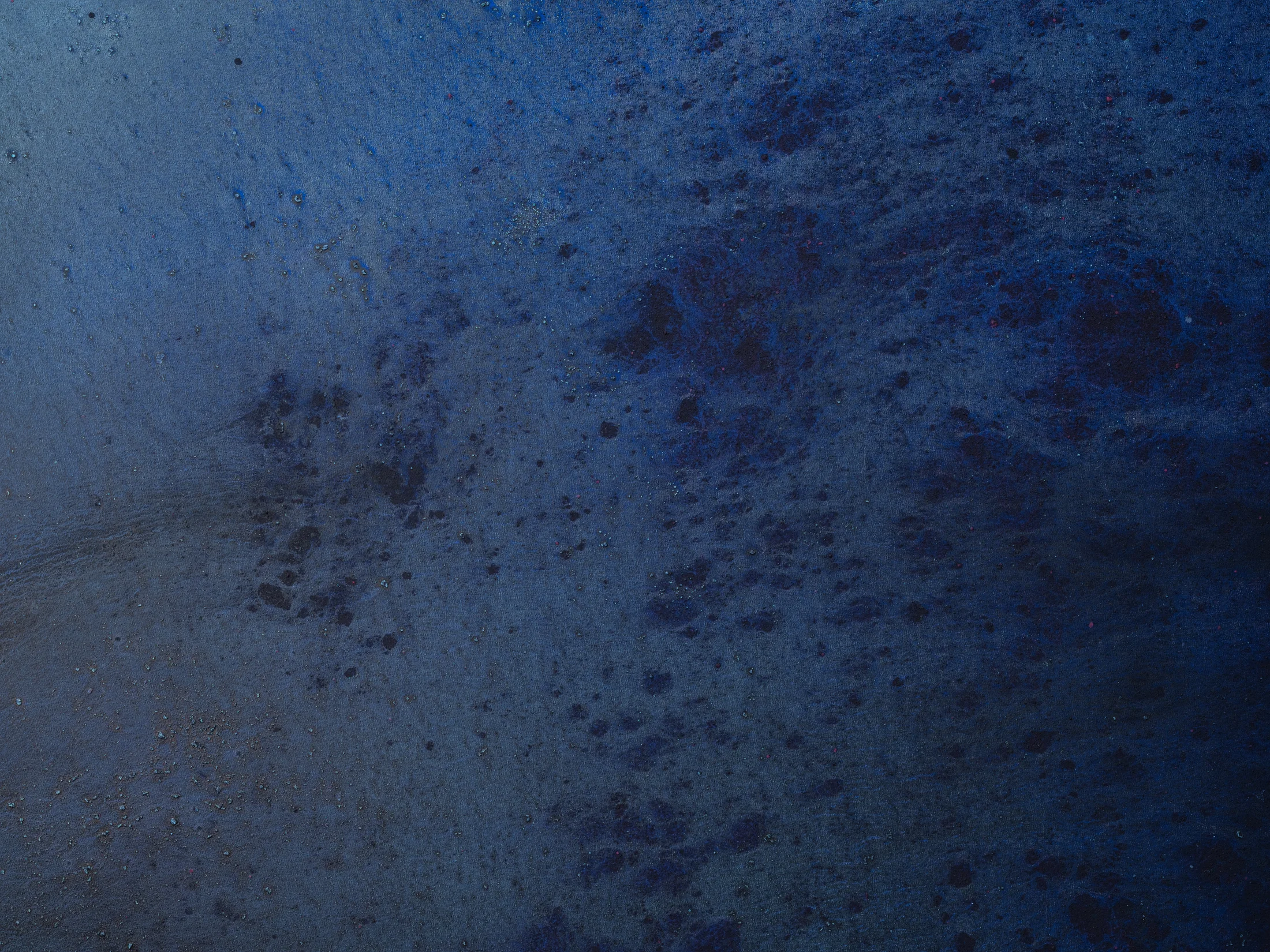
Liang FuThe traces left as water evaporates from the pigment remind me of sand on the beach being constantly washed over. This resonates with the mineral pigments I use: their matte texture and graininess are exactly what I want to preserve in this painting. The image left after the pigment dries seems to have an inexplicable, subtle relationship with the theme of the painting. It is precisely this materiality that is so hard to control that has given me a new understanding of the material itself.
What happens when the subject becomes harder to recognise?
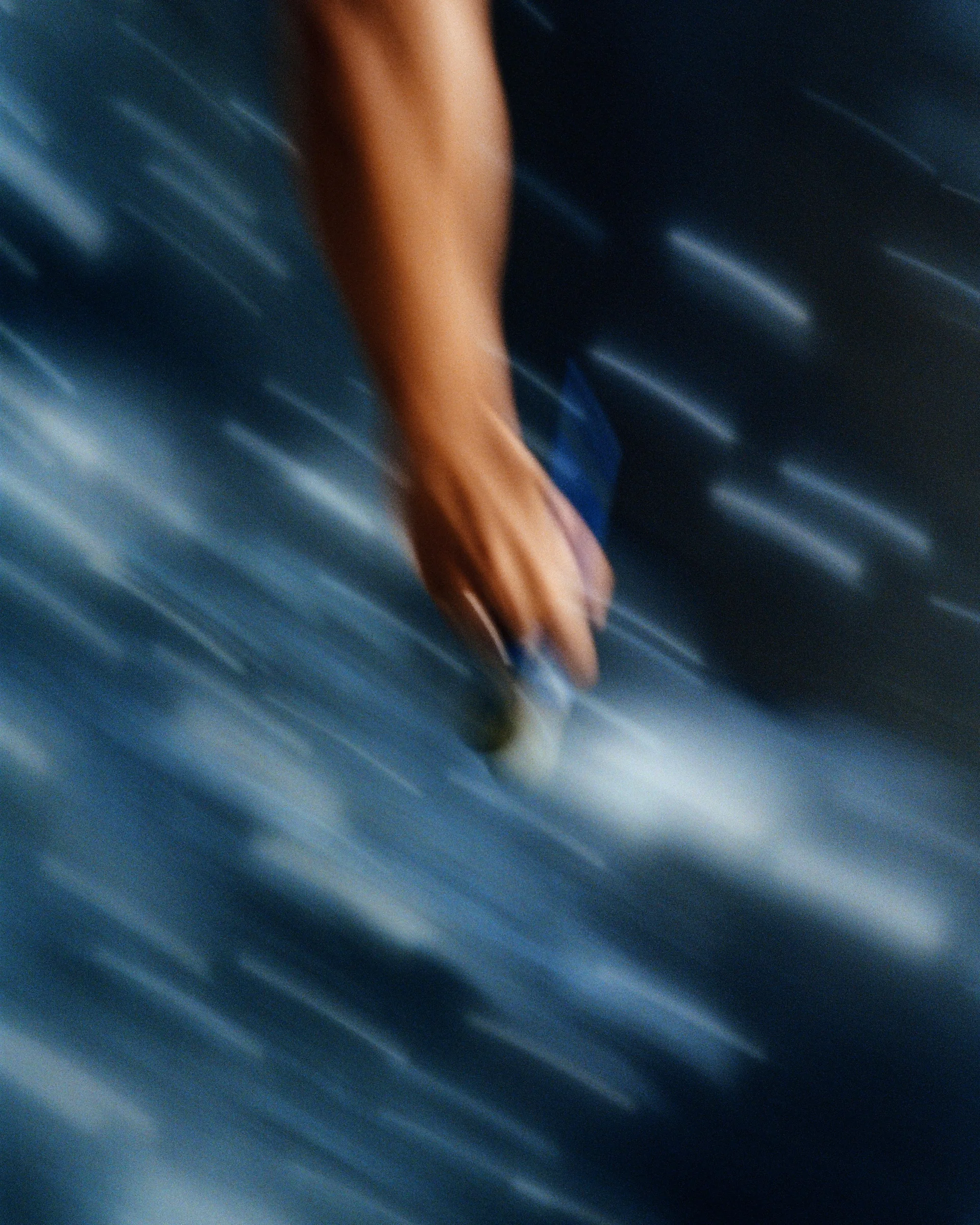
Liang FuI would choose the same painting to answer this question. Its composition explores a subtle relationship: when the subject is concealed, the whole picture either collapses or turns into a more abstract work. I think this also relates to the influence of negative space, or liubai, in traditional Chinese painting.
What did installing Sublunary reveal that you could not see in the studio?
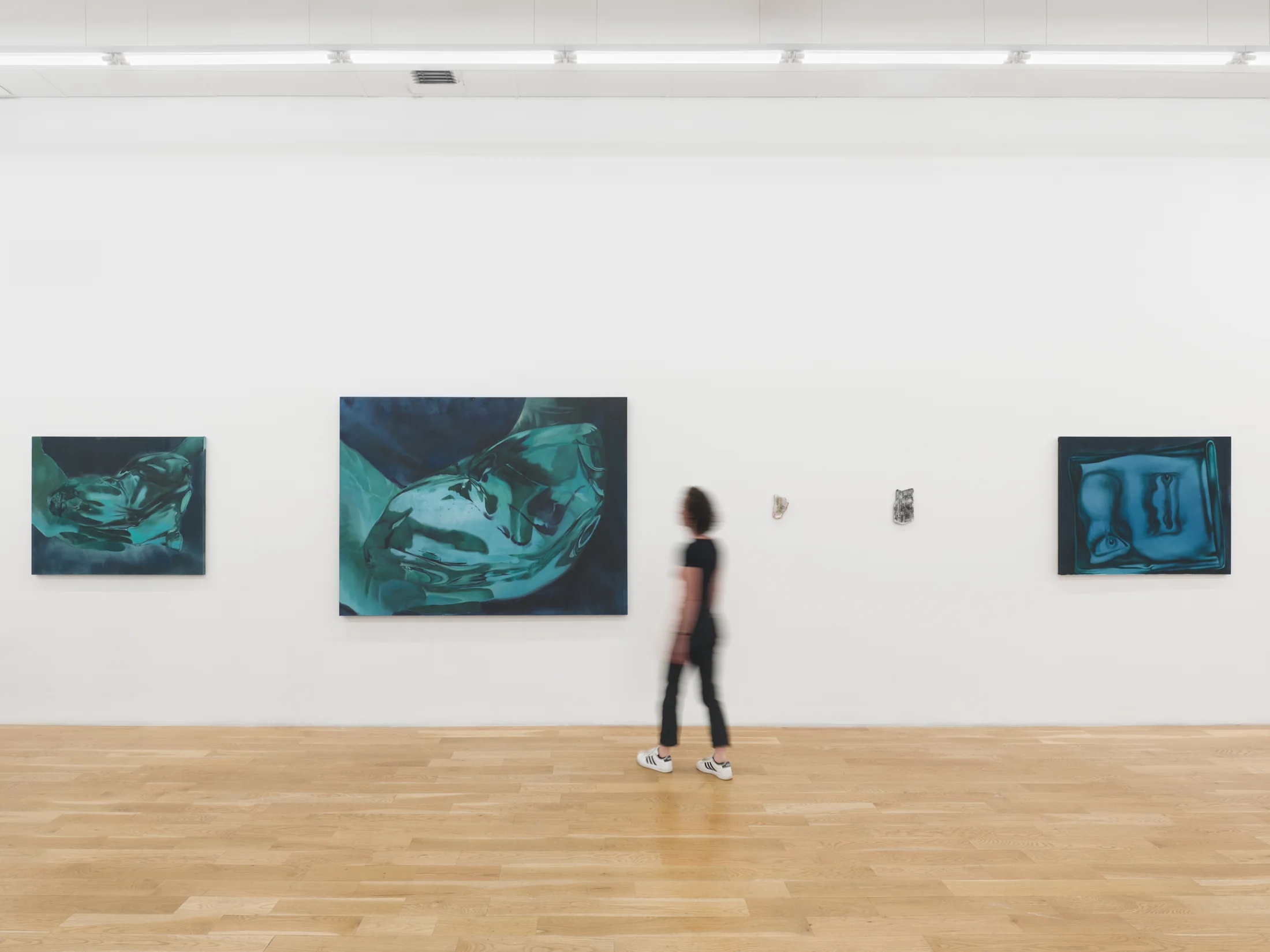
Liang FuThe exhibition revealed problems I could not see in the studio—or a way of re-examining my works. I have always been interested in how works are presented in space, how different spaces affect our perception, and how I can guide people to look through the arrangement of the works. In this exhibition, I placed the two painted works on crystal among the paintings, making them a part you must see rather than exhibiting them separately. The light in the gallery also gave me new ideas for the works in my next exhibition.
What are you preparing next?
Liang FuI will be presenting new works during Shanghai Art Week on 7 November. The exhibition is based on the space itself: Linseed Gallery is located in a house in Shanghai’s former French Concession. The intimacy of this residential space, with its different small rooms, is a great challenge for me. I have prepared works for the different spaces to discuss the influence of material, light and space on our perception.