Maria Koshenkova
Knowing When to Stop
On a glass kept from her grandparents’ home, the limits of working at the furnace, and the way sculpture shapes a room.
Read the conversation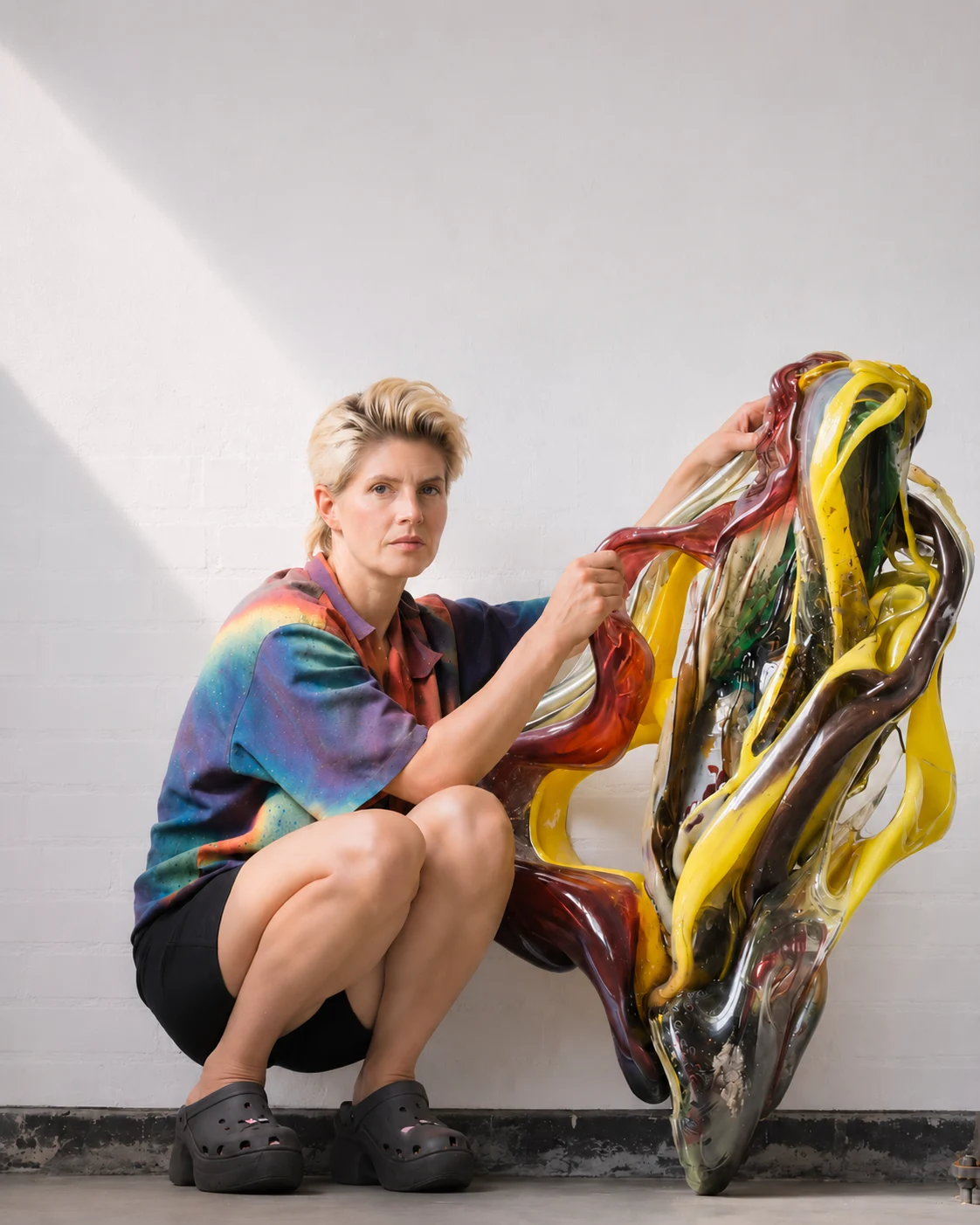
In her grandparents’ apartment, Maria Koshenkova spent weeks deciding what to keep. One drinking glass found its way into her sculpture Faun’s Flesh (Arena Rosada). At the furnace, she faces a different decision. She would often like to keep working when the glassblowers are ready to stop. In this conversation with Art Curatorial Nomads, the Copenhagen-based sculptor talks about what brings a work to an end, what makes a visitor bend down, and what a photograph can tell us if it shows enough of the room.
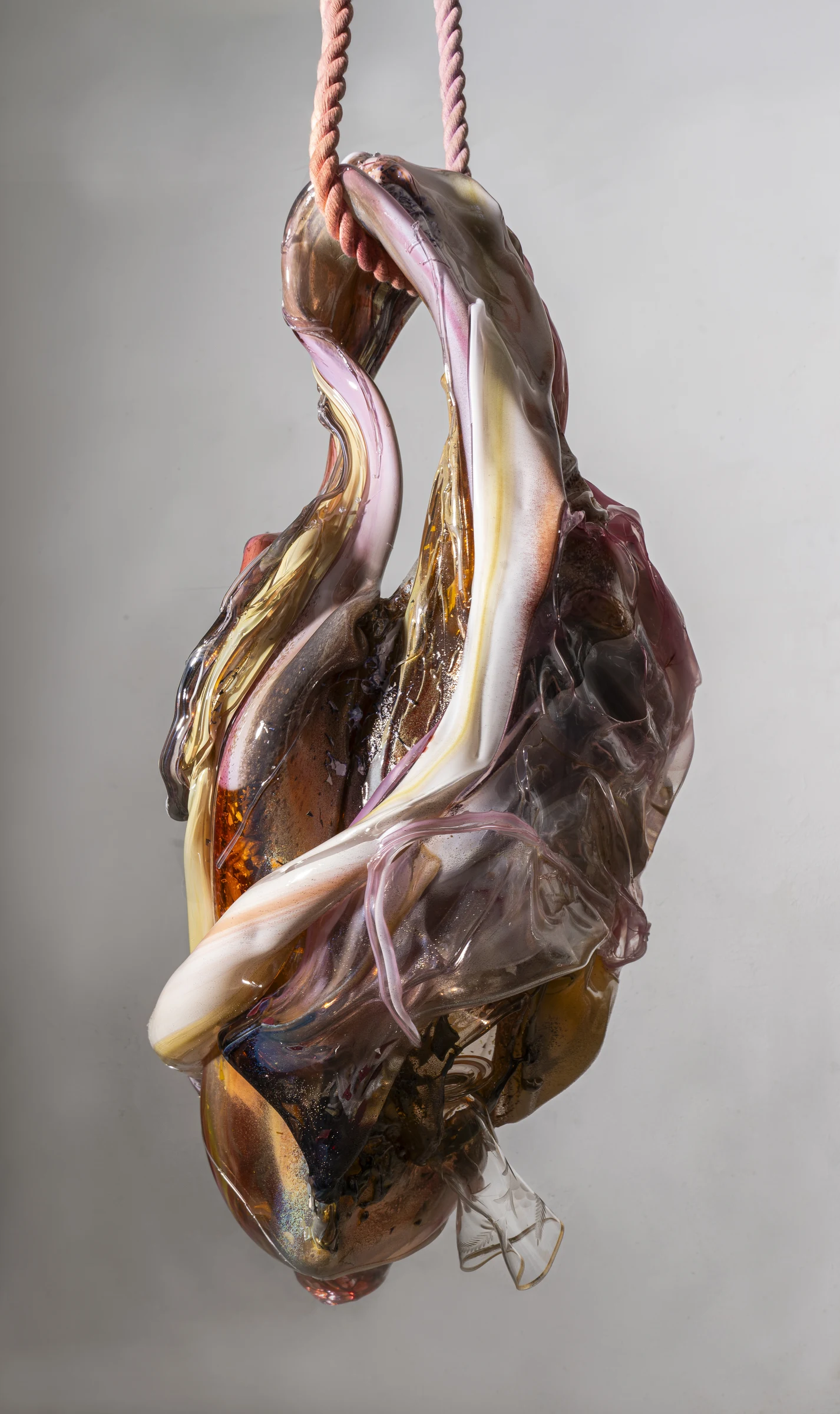
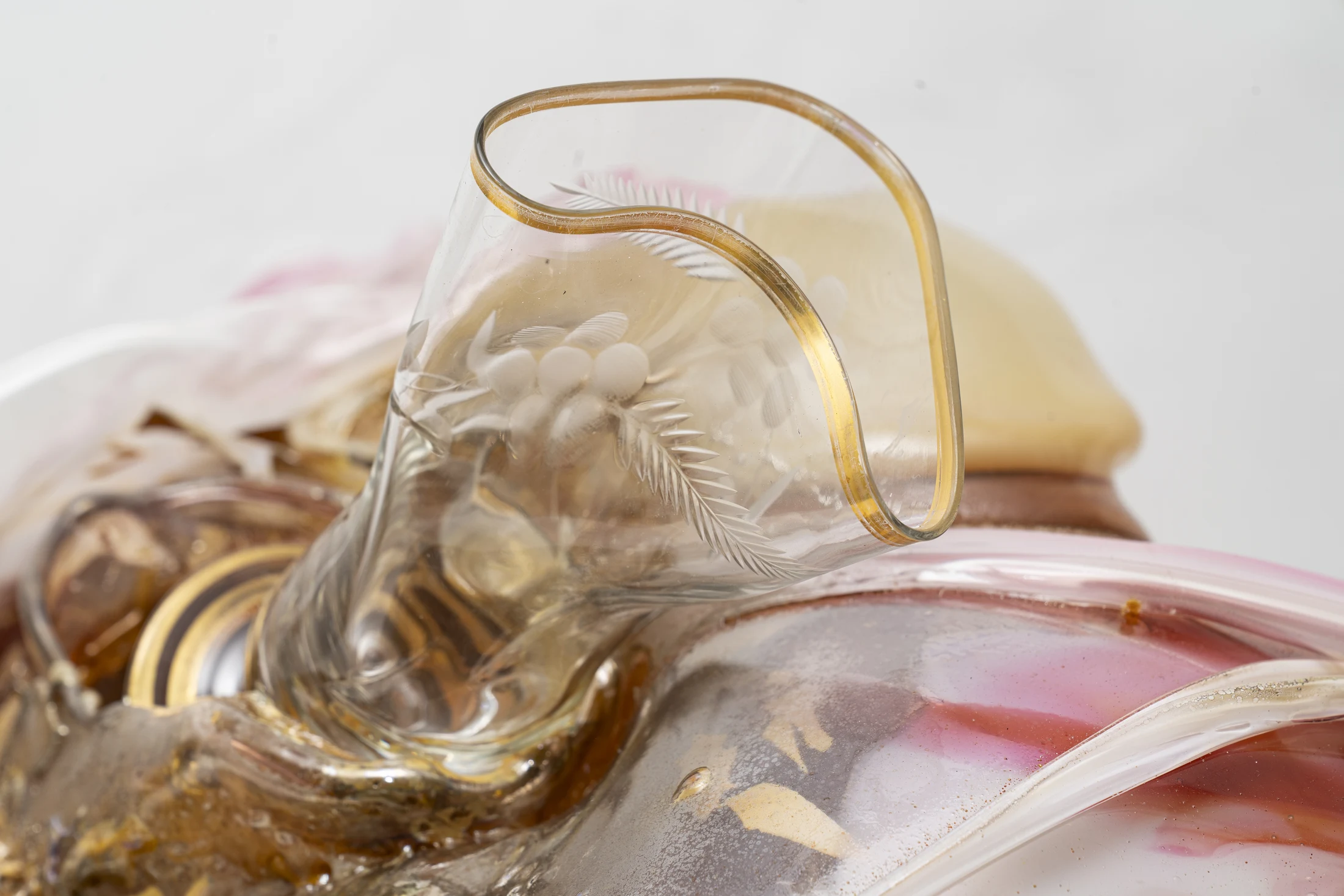
In Faun’s Flesh (Arena Rosada), presented at the LOEWE FOUNDATION Craft Prize 2026, blown glass and found vintage glass are combined. Which found fragment turned out to be essential to this work, and what about its previous life did you want to preserve?
Maria KoshenkovaThe vintage element in this work is an old glass from my grandparents, which I kept. After they died, their apartment was filled with things that they left me. They hadn't thrown away anything, and I spent several weeks going through each piece and deciding: Shall I keep it? Shall I throw it away? Does it have value, and what kind of value?
I do think that glasses and cups we use every day are really important; they also keep the memories of the people who used them before. So, this glass is my memory of my grandparents, attached to my glasswork. It reminds me of them and their home, which is hard to visit for me now. Basically, I try to give emotions shape. That's maybe what most of my work is about.
In your interview with Art Matter, you described working at the furnace as a collaborative choreography. Can you recall a moment when the glassblower’s actions or the behaviour of the glass made you change your original decision? What remained in the form as a result?
Maria KoshenkovaI often have to stop working because the team and I get physically tired, the working day is over, or the piece becomes so large and unstable that it risks collapsing if we continue. I have to be sensitive to what the glassblowers tell me, even though my excitement often pushes me to go further, sometimes stopping only when the piece is on the verge of collapse. Otherwise, I would probably keep working on a piece forever, as I sometimes have difficulty knowing when to stop. I've realised that limitations of any kind often make my work stronger. It's actually good for me to work with other people because they create a framework of limitations for me.
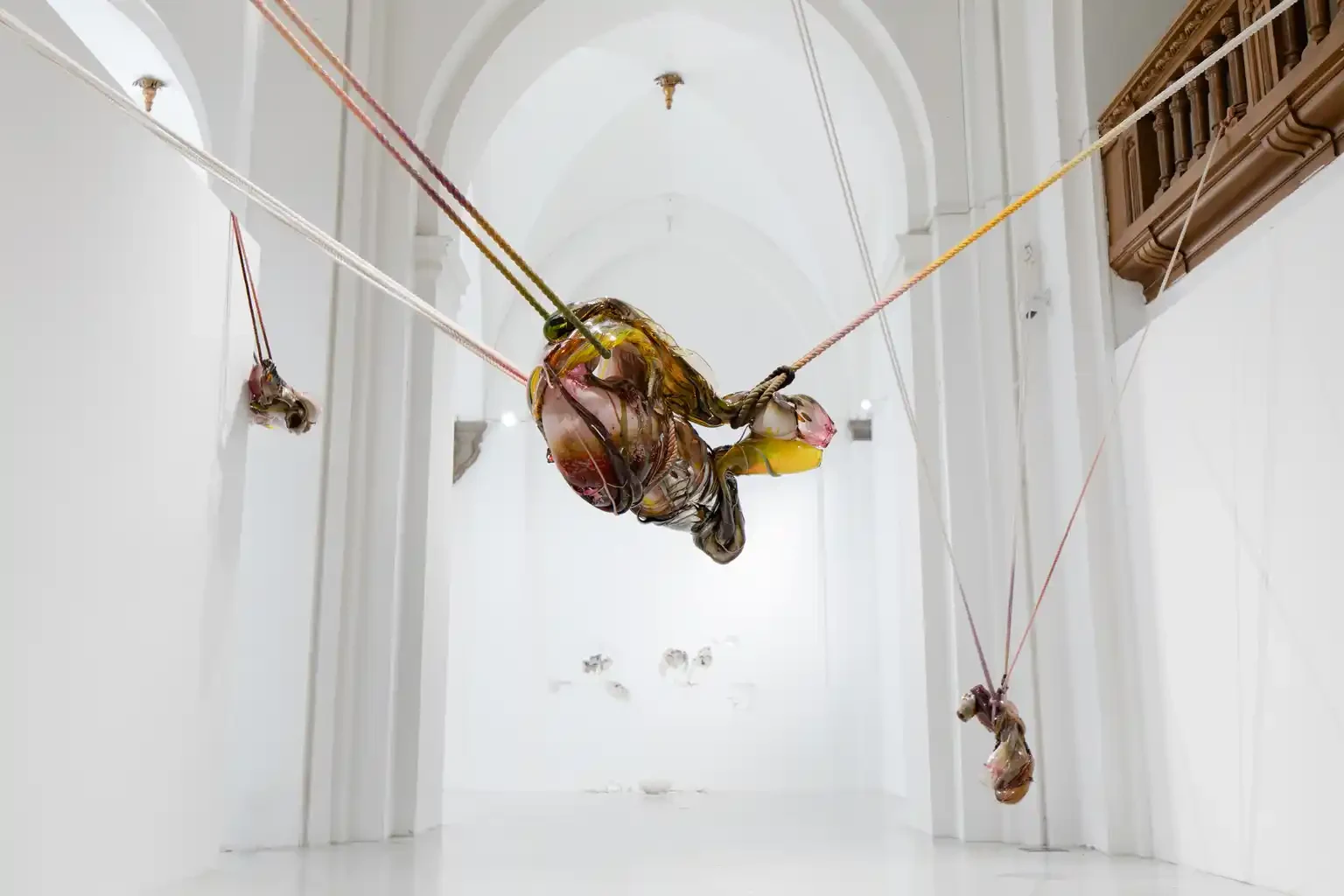
In The Caretakers, presented in the exhibition I’m Sorry, This Space Is Reserved, suspension and tension extend into the viewer’s space. How did you determine where a person could walk, approach or stop?
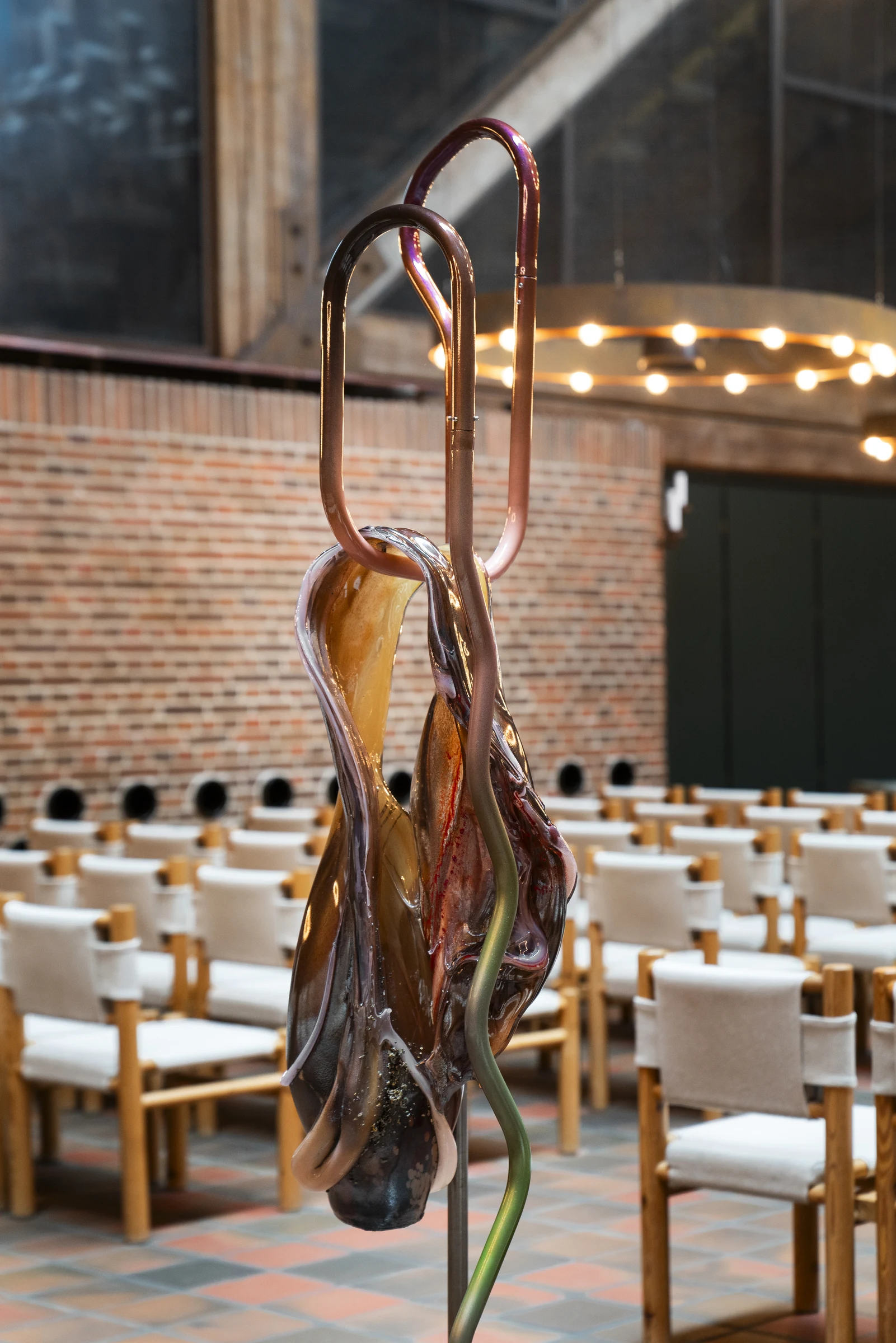
Maria KoshenkovaThere are some limitations imposed by the building, such as fire passages. But basically, I think a lot about spatial choreography: how high the pieces are, whether you have to bend to walk underneath them, and how close you can get to them. Sculpture shapes the space and determines how you can move through it. I don't have an exact recipe for how people should walk, but there is a certain dramaturgy to the space and how tension is created. For example, at Nikolaj Kunsthal, I suspended pieces from an existing wooden construction where the organ used to stand. This created an extra tension that could only emerge in that particular space. I install one piece after another, intuitively, in direct communication with the room and each other. Light is also very important; with glass, it is often 50% of how a work is perceived.
In Resonant Chaos, the visitor’s movement activated sound. How has your attitude towards audience participation changed since then? Is there an action you would like to bring back into the relationship between people and glass today?
Maria KoshenkovaI am fascinated by ballet, which I trained in as a child. I see the body as a sculptural medium. My sculptures do not represent the body; they behave like one, constantly negotiating forces from within and without.
Glass records everything: heat, gravity, hesitation, speed, pressure — the material stores these movements within itself. The surface becomes a kind of skin, carrying traces of every action performed upon it. I am particularly interested in how movement, sound and my sculptures can interact.
Glass is normally presented as an isolated form, separated from the body and out of reach of touch. I want to bring physicality back. I want my pieces to be touched and felt.
I want to bring this physical dimension in by working with dancers and musicians. I recently attended a concert by a Swedish musician who builds her own organs using a compressed-air machine similar to the one I use for cold-working glass. Finding the right space for this kind of work is something I would like to pursue in the near future.
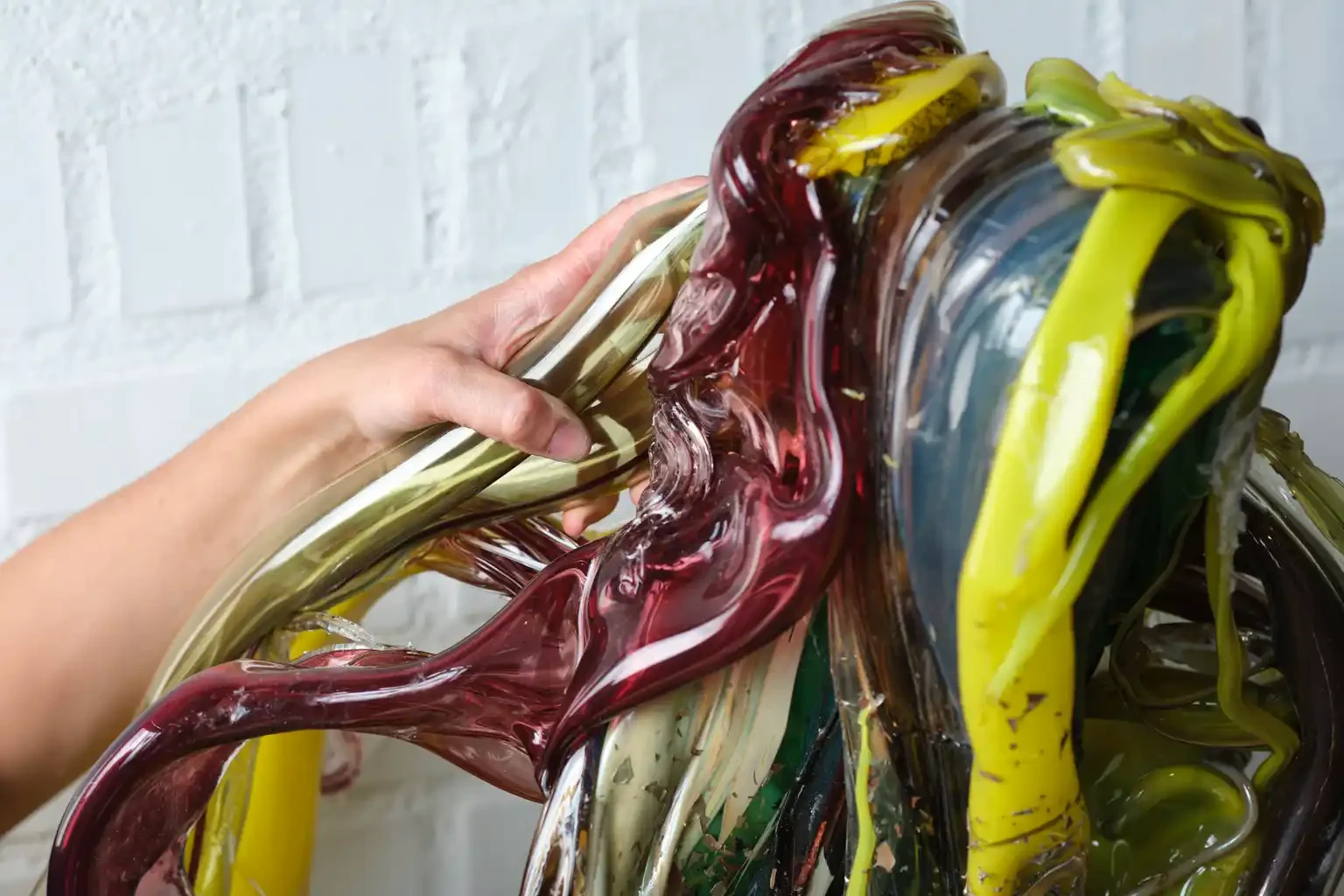
Is there a work that looks good in a photograph, but where the photograph nevertheless distracts from what is most important to you about it? How would you suggest presenting it in our publication?
Maria KoshenkovaGood question. Actually, I am very attentive to how my work is documented. I used the same photographer for a long time, and now I am experimenting with others, precisely because I want to find a way to show the work as I want it to be seen. Not just showing all the details, but showing how it interacts with the space and with the viewer.
It's not a simple task. In some pictures, I think the work looks really good and really tasty, but I am looking for something else. I normally like to include part of the space together with the work, an extra dimension of light and shadow. It is not just about the object in itself, but about how it transforms the space around it. Normally, I am not really happy with an image until it shows the work the way I want it to.
In the spring, you spoke about moving towards larger-scale works and public space. What specific artistic question is driving this transition at the moment? Tell us about a work or experiment that can already be discussed, and about the nearest confirmed project, if there is one.
Maria KoshenkovaWell… I'm actively searching for the right opportunities to create larger-scale and permanent works in public space.
Meanwhile, I'm developing a solo project at a kunsthalle on the remote and rather exotic Danish island of Læsø. The project puts my work in dialogue with a metal sculpture by the renowned Danish sculptor Jørgen Haugen Sørensen, which is part of the kunsthalle's collection. I will also work with locally sourced metal from the island's shipbuilding industry, connecting my sculptures with Haugen Sørensen's work and the kunsthalle's space, which used to be an auto workshop.
A permanent work of mine will remain on the island after the exhibition, which I'm very excited about.